







What's Happening?
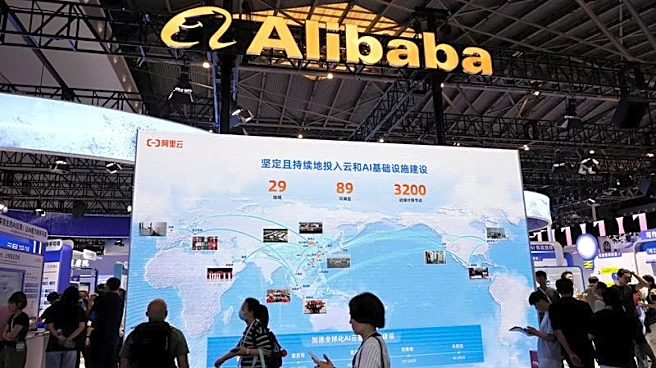
Alibaba's U.S.-listed shares experienced a 3.4% drop in premarket trading after the Chinese e-commerce giant announced a $10.2 billion share sale at a significant discount. This move is intended to fund Alibaba's investments in artificial intelligence
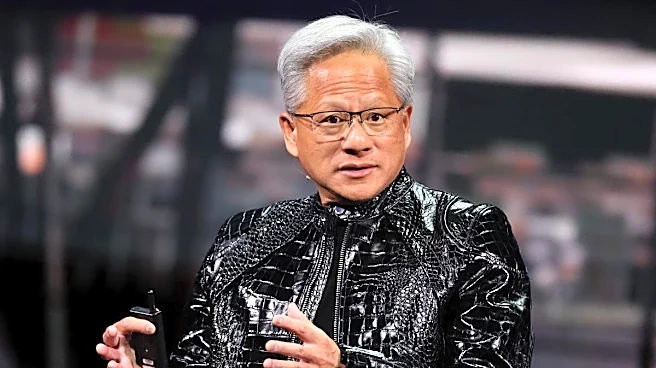
(AI), contributing to broader investor concerns about the financial strain AI spending is placing on hyperscalers' free cash flow. Concurrently, the semiconductor sector saw a general decline in premarket trading. While Nvidia, the world's most valuable company, saw a slight gain of 0.1%, and Apple rose by 0.4%, other major chipmakers faced losses. Sandisk was down 5%, Seagate fell 3.2%, and Coherent dropped 4.7%. Investors are closely watching Nvidia, which is scheduled to report earnings on Wednesday, for any indications of slowing growth that could reignite worries about inflated AI valuations. Reports suggest that some of Nvidia's largest customers have been informed of price increases exceeding 15% for servers containing its AI chips.
Why It's Important?
The discounted share sale by Alibaba and the premarket dip in chipmaker stocks highlight a growing tension in the technology sector: the immense capital required for AI development versus investor expectations for profitability and sustainable growth. Alibaba's decision to raise significant capital at a discount underscores the competitive pressure to invest heavily in AI, even if it means diluting existing shareholder value. This trend could impact other tech companies as they grapple with similar investment needs. For the chip industry, the mixed performance, with Nvidia holding steady while others decline, reflects the market's selective optimism. While AI demand is driving growth for some, concerns about 'stretched AI valuations' suggest that investors are becoming more discerning. The reported price increases for Nvidia's AI servers could indicate strong demand and pricing power, but also raise questions about the long-term cost implications for companies relying on these advanced chips, potentially affecting their own AI investment strategies and profitability.
What's Next?
All eyes will be on Nvidia's earnings report scheduled for Wednesday. The report is expected to provide crucial insights into the current state of the AI chip market and could either alleviate or exacerbate concerns about AI valuations and growth trajectories. Any signs of slowing growth from Nvidia could trigger a broader market correction in AI-related stocks. Furthermore, the impact of Alibaba's discounted share sale on its stock performance and future AI investments will be closely monitored. The broader trend of hyperscalers' free cash flow being strained by AI spending is likely to continue, prompting companies to explore various financing strategies. The market will also be observing how other chipmakers adapt to the competitive landscape and the pricing strategies of dominant players like Nvidia, which could influence their own product development and market positioning in the coming months.
Beyond the Headlines
The current market dynamics in the AI and semiconductor sectors reveal a deeper narrative about the sustainability and accessibility of advanced technology. The substantial capital required for AI development, as evidenced by Alibaba's share sale, could create a widening gap between well-funded tech giants and smaller innovators. This could lead to increased consolidation in the AI space, as smaller players struggle to keep pace with investment demands. Moreover, the rising costs of AI chips, as suggested by Nvidia's reported price increases, could impact the broader adoption of AI across various industries. If AI infrastructure becomes prohibitively expensive, it could slow down innovation and limit the benefits of AI to a select few, potentially exacerbating digital divides. This situation underscores the critical need for balanced investment, competitive pricing, and strategic partnerships to ensure that the transformative potential of AI is realized broadly and equitably across the economy.