
What's Happening?
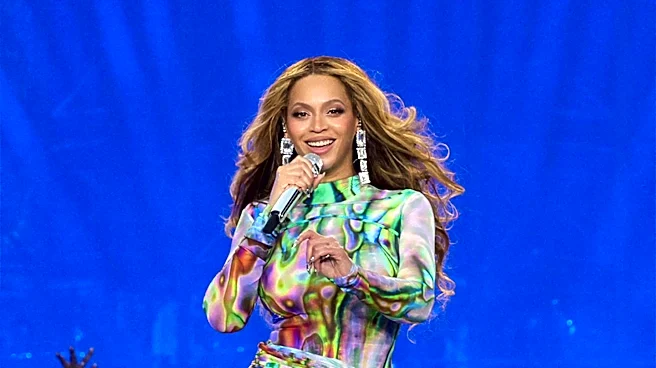
Beyoncé's 2023 Renaissance tour has significantly influenced concert-goer fashion, fostering a strong sense of community among her audience. The artist herself encouraged fans to dress in silver, particularly
during Virgo season, aligning with her birth month. This trend of elaborate concert dressing, while not new, gained international attention with tours like Taylor Swift's Eras tour and Beyoncé's Renaissance tour. Fans are dedicating considerable time and money to create outfits that reflect the tour's aesthetic, transforming concert attendance into a communal event. This phenomenon is seen as a direct reaction to a broader trend in the pop music scene where audiences prioritize belonging and shared experience over individual attention from the artist. The commitment to specific aesthetics, such as silver attire for the Renaissance tour, highlights a shift towards collective cultural participation in live music events.
Why It's Important?
This trend in concert dressing signifies a notable evolution in how audiences engage with live music, moving beyond passive consumption to active, communal participation. For the entertainment industry, this means that fan engagement now extends far beyond ticket sales and merchandise, encompassing a significant investment in personal expression and community building. This heightened level of fan dedication can translate into increased cultural relevance and sustained interest in artists' work, as fans become co-creators of the live experience. Economically, this trend benefits various sectors, including fashion, retail, and event planning, as fans purchase or create elaborate costumes. It also highlights the power of artists like Beyoncé to shape cultural trends and foster strong, identifiable communities around their brand, influencing consumer behavior and social interaction within the music landscape.
What's Next?
The continued influence of artists like Beyoncé on fan culture suggests that elaborate concert dressing and community-driven experiences will likely remain a prominent feature of live music events. Future tours may see artists more actively encouraging specific dress codes or interactive elements to further enhance fan participation. This could lead to new marketing strategies within the music industry, focusing on creating immersive experiences that extend beyond the performance itself. Retailers and fashion brands may also increasingly collaborate with artists or leverage these trends to offer themed apparel and accessories. The emphasis on community and shared identity among fans is expected to grow, potentially leading to more fan-organized events and online communities centered around these cultural phenomena.
Beyond the Headlines
Beyond the immediate spectacle, this trend reflects deeper sociological shifts, particularly among a generation that has grown up largely online and experienced significant isolation, such as during the pandemic. The collective effort in concert dressing provides a tangible way for individuals to connect, belong, and express themselves within a shared cultural space. It transforms a commercial event into a ritualistic gathering, offering a sense of identity and solidarity that might be lacking in other aspects of modern life. While commercialization is undeniably a factor, the sincerity and remarkability lie in how audiences turn to each other for societal placement, rather than solely seeking validation from the artist. This phenomenon underscores the evolving nature of fandom, where the community itself becomes a central and powerful aspect of the artistic experience.