





What's Happening?
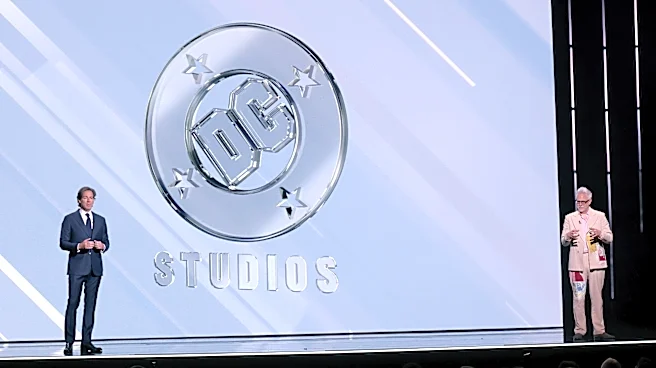
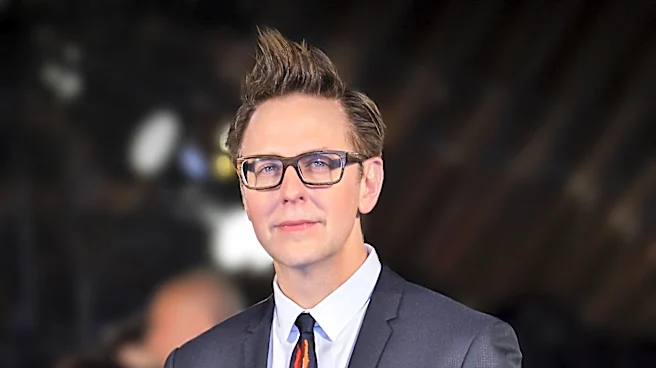
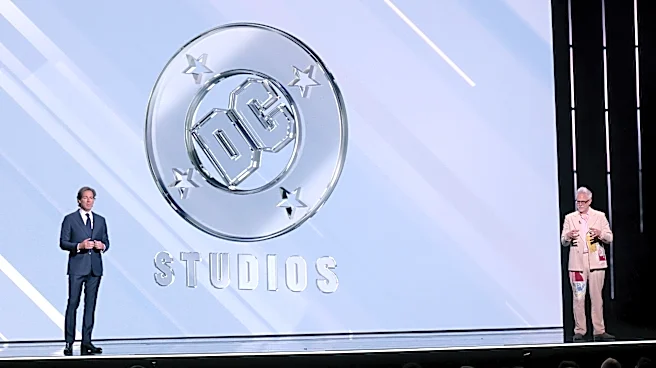
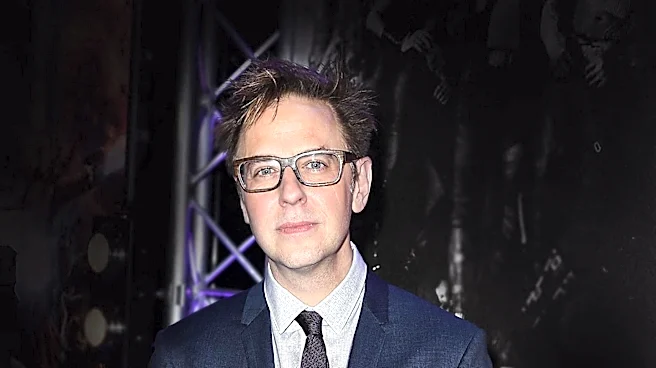
James Gunn, co-CEO of DC Studios, has confirmed that Matt Reeves' upcoming film, 'The Batman Part II,' will not feature superpowers or metahumans. This decision aligns with the grounded, gritty, crime-noir approach established in the first 'The Batman'
film, which premiered in 2022. The 'Batman' saga, starring Robert Pattinson, is categorized as an 'Elseworlds' project, meaning it exists outside the main DC Universe continuity. This allows Reeves to maintain a realistic portrayal of both heroes and villains, a precedent set by the first movie where characters like Catwoman and Penguin were depicted without exaggerated powers or weapons often seen in DC Comics. Gunn emphasized that the 'Elseworlds' designation enables such a 'very grounded' narrative, distinguishing it from the main DCU which is populated with super-powered beings.
Why It's Important?
This creative decision by Matt Reeves, supported by James Gunn, has significant implications for the direction of the 'Batman' film series and the broader superhero genre. By deliberately excluding superpowers and metahumans, 'The Batman Part II' reinforces a commitment to a more realistic and character-driven narrative, potentially appealing to audiences who prefer a less fantastical take on comic book adaptations. This approach differentiates it from many contemporary superhero films that heavily rely on extraordinary abilities and large-scale, world-ending threats. For fans, this means a continued focus on detective work, psychological depth, and practical action, rather than the introduction of super-powered elements. It also highlights the flexibility of the 'Elseworlds' concept, allowing filmmakers to explore iconic characters in unique, self-contained universes without being constrained by established continuity or the need to integrate with other super-powered characters.
What's Next?
The decision to maintain a grounded universe in 'The Batman Part II' suggests that future installments within Reeves' 'Elseworlds' saga will continue to prioritize realism and a crime-noir aesthetic. This means that elements often associated with Batman's broader lore, such as Robin, Lucius Fox, the League of Assassins, or advanced gadgets like the Batwing, are unlikely to appear or will be significantly reinterpreted to fit the established tone. The film is expected to introduce villains 'never really been done in a movie before,' further emphasizing a fresh, grounded approach. While some fans may be disappointed by the absence of superpowers, this direction sets a clear expectation for the type of storytelling audiences can anticipate, focusing on the human and psychological aspects of Batman's world. The film is slated for release in 2028, and further details regarding its plot and new characters are expected to emerge as production progresses.
Beyond the Headlines
The choice to keep 'The Batman Part II' devoid of superpowers and metahumans delves into a deeper philosophical debate within comic book adaptations: the balance between fantastical elements and grounded realism. This approach echoes Christopher Nolan's 'The Dark Knight' trilogy, which also sought logical counterparts for many of DC Comics' more unrealistic traits. By doing so, Reeves' saga explores the human condition, the nature of crime, and the psychological toll of vigilantism without the crutch of extraordinary abilities. This can lead to more resonant storytelling, where the stakes feel more immediate and the characters' struggles more relatable. It also challenges the conventional expectations of superhero movies, potentially influencing other filmmakers to explore similar grounded narratives. The 'Elseworlds' label itself signifies a growing trend in comic book cinema to allow for diverse interpretations of beloved characters, fostering creative freedom and catering to varied audience preferences beyond a single, unified cinematic universe.