





What's Happening?
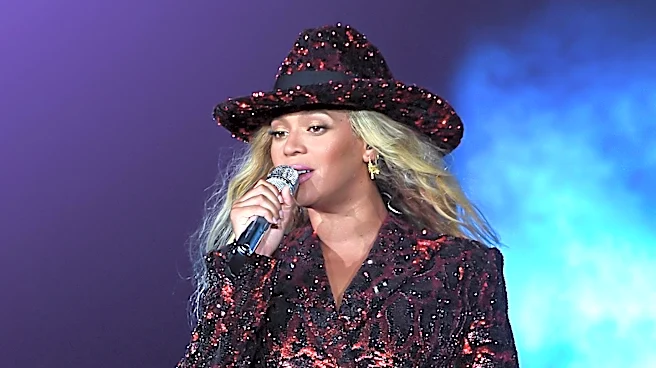
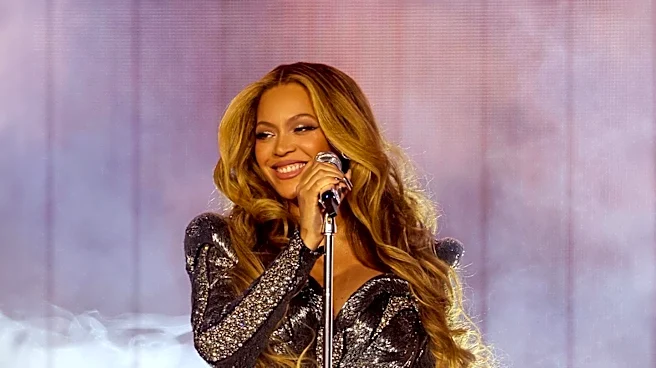
Beyoncé has consistently employed a strategy of narrative control throughout her career, characterized by unexpected releases and a deliberate silence following the launch of her projects. This approach was evident with her 2013 self-titled album, which
appeared without prior announcement, complete with accompanying videos for every song. This method created significant surprise and allowed the work itself to define the public conversation. Similarly, her 2016 album 'Lemonade' and its accompanying film, which explored themes of betrayal and Black womanhood, were released without subsequent interviews explaining specific lyrics or personal interpretations. More recently, her 2022 album 'Renaissance' was presented as the first act of a larger project, followed by a stadium tour that became integral to the album's identity. This pattern continued with 'Cowboy Carter,' which sparked broader discussions about country music history and the contributions of Black musicians. By limiting her direct commentary, Beyoncé enables critics and fans to interpret and debate her work, rather than chasing every online interpretation with corrections.
Why It's Important?
This strategic control of her narrative has significant implications for the music industry and celebrity culture. In an era where social media often pressures artists to constantly engage and broadcast, Beyoncé's method demonstrates an alternative model for maintaining artistic integrity and public interest. Her approach creates a sense of scarcity around her public appearances and direct statements, ensuring that when she does speak, her words carry substantial weight. This contrasts with the common practice of continuous content feeding, which can dilute an artist's message. By allowing her work to speak for itself, Beyoncé fosters deeper engagement and interpretation from her audience, making the art itself the primary focus rather than the artist's personal life or constant explanations. This also highlights the value of privacy in an increasingly accessible world, proving that an artist can share profound emotional truths without providing unrestricted access to their personal life.
What's Next?
Beyoncé's continued adherence to this strategy suggests that future projects will likely follow a similar pattern of unexpected releases and minimal direct commentary. This approach will likely continue to generate significant public and critical discussion, as audiences and critics are left to interpret her work without constant guidance from the artist. The success of this method may also influence other artists to reconsider their engagement strategies in the digital age, potentially leading to a shift towards more deliberate and less reactive communication. Her ability to create 'worlds' around her albums, complete with recognizable imagery and themes, indicates a continued focus on comprehensive artistic experiences that stand on their own, rather than relying on traditional promotional campaigns.
Beyond the Headlines
The deeper implication of Beyoncé's narrative control lies in its challenge to the modern celebrity paradigm. In a culture that often conflates accessibility with authenticity, she demonstrates that privacy can coexist with deeply personal and impactful work. This raises ethical questions about the expectations placed on public figures to constantly share and explain themselves. Her method suggests that true authenticity might not be found in endless self-disclosure, but rather in the deliberate crafting and presentation of one's art. This also highlights a long-term shift in how artists can leverage their influence, moving from being broadcasters of their own lives to curators of their artistic legacies. By choosing when and how to engage, Beyoncé reclaims agency over her public persona and artistic message, setting a precedent for how artists can navigate fame in the digital age.