






What's Happening?
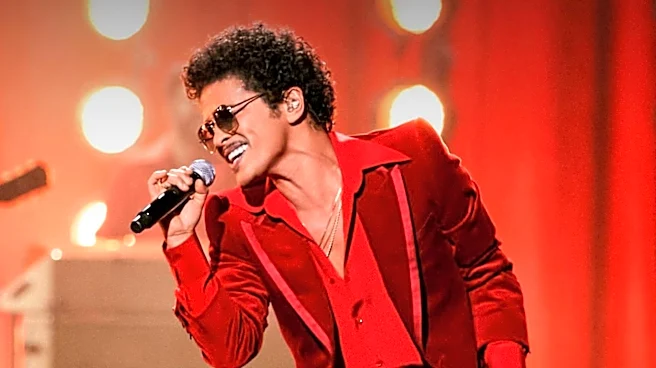
Bruno Mars, born Peter Gene Hernandez in Honolulu, Hawaii, on October 8, 1985, is a global music superstar whose diverse heritage has profoundly influenced his artistic identity. Growing up in Waikiki, Oahu, Mars was immersed in a rich cultural environment
that blended Polynesian, Asian, and American influences. His family was deeply involved in the local entertainment scene; his father, Peter Hernandez, was a percussionist, and his mother, Bernadette San Pedro Bayot, was a hula dancer and vocalist. They ran a family variety show, exposing Mars to live music and performance from a young age. By four, he was performing as a child Elvis Presley impersonator in the family band, 'The Love Notes.' This upbringing allowed him to absorb various musical styles, including traditional Hawaiian melodies, reggae, American rock 'n' roll, doo-wop, and R&B. His maternal lineage connects him to Filipino and Spanish descent, as his mother immigrated from the Philippines. On his paternal side, Mars has Puerto Rican and Jewish heritage, with his Jewish ancestors originating from Hungary and Ukraine. This multicultural background, while a source of his unique sound, also presented challenges early in his career, as music executives often tried to pigeonhole him into specific genres based on his surname, Hernandez.
Why It's Important?
Bruno Mars' journey highlights the significant impact of multicultural heritage on American popular culture and the global music industry. His ability to seamlessly blend funk, R&B, reggae, rock, pop, and soul directly reflects his diverse upbringing, challenging traditional genre boundaries and appealing to a broad international audience. This cross-cultural appeal has been instrumental in his massive commercial success in North America, Europe, Latin America, and Asia. His experience also sheds light on the challenges faced by multi-ethnic artists in an industry that often seeks to categorize and stereotype. Mars adopted his stage name to avoid being pigeonholed, demonstrating the pressure artists can face to conform to specific ethnic or musical boxes. His success underscores the value of authenticity and the power of an artist to transcend predefined labels, ultimately enriching the musical landscape with a unique and universally beloved sound. His career serves as an example of how diverse backgrounds can lead to innovative artistic expression and global resonance.
What's Next?
Bruno Mars continues to be a prominent figure in the global music scene, with his unique blend of genres and captivating performances. His ongoing influence is likely to inspire a new generation of artists to embrace their diverse backgrounds and experiment with various musical styles, further blurring traditional genre lines. The success of artists like Mars may encourage record labels and industry executives to adopt more inclusive and flexible approaches to artist development and marketing, moving away from rigid categorization. Future collaborations, similar to his work with Anderson .Paak in Silk Sonic, are anticipated to further explore and honor different musical traditions, showcasing his deep respect for music history. As the music industry evolves, Mars' career trajectory could serve as a model for how artists can leverage their multicultural identities to achieve widespread appeal and lasting impact, potentially leading to more diverse representation and innovative sounds in mainstream music.
Beyond the Headlines
Beyond his musical achievements, Bruno Mars' story touches on deeper themes of identity, cultural assimilation, and the evolution of American identity. His decision to adopt a stage name to avoid ethnic stereotyping reflects broader societal issues within the entertainment industry regarding representation and pigeonholing. This highlights the ongoing struggle for artists from diverse backgrounds to be recognized for their talent rather than their ethnicity. His music, which often draws from various cultural influences, serves as a powerful example of cultural fusion, demonstrating how different traditions can come together to create something new and universally appealing. This cultural synthesis not only enriches the arts but also fosters greater understanding and appreciation across different communities. Mars' journey from a child performer in Hawaii to a global icon also underscores the importance of early exposure to diverse cultural experiences and the role of family in nurturing artistic talent, offering a compelling narrative about the power of heritage in shaping individual and collective identity.