




What's Happening?
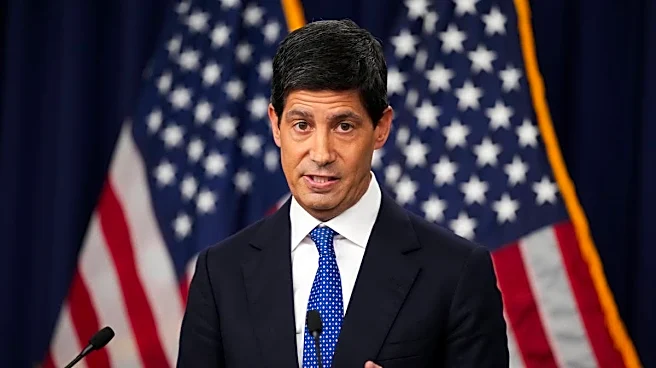
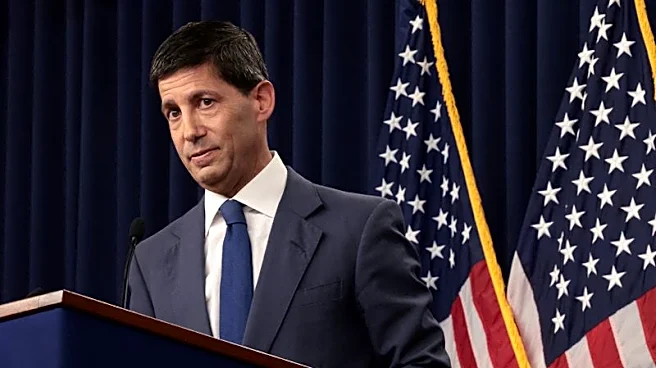
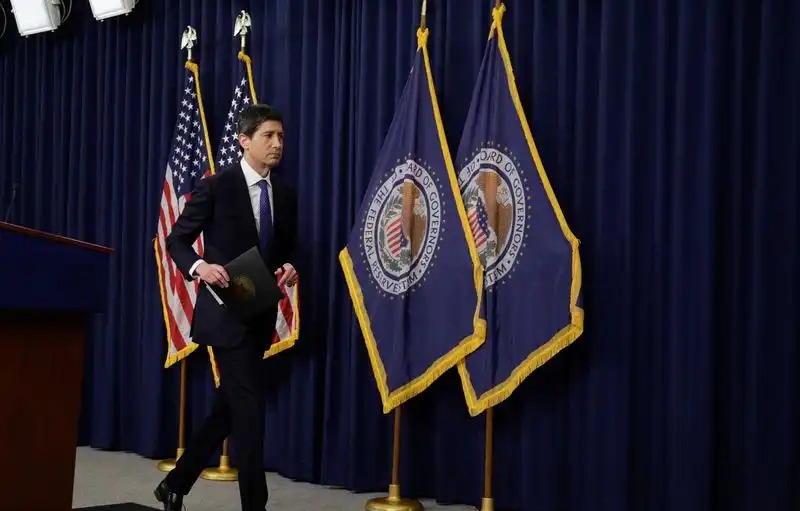
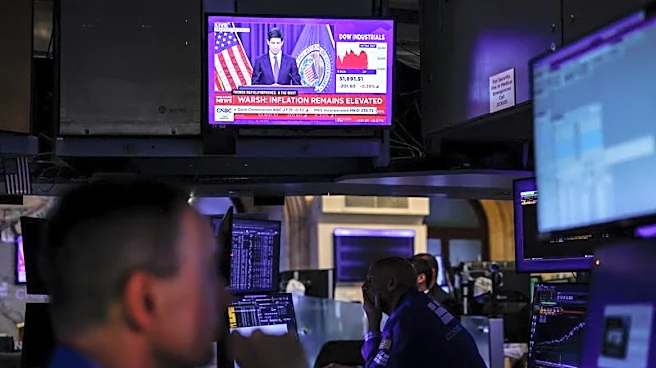
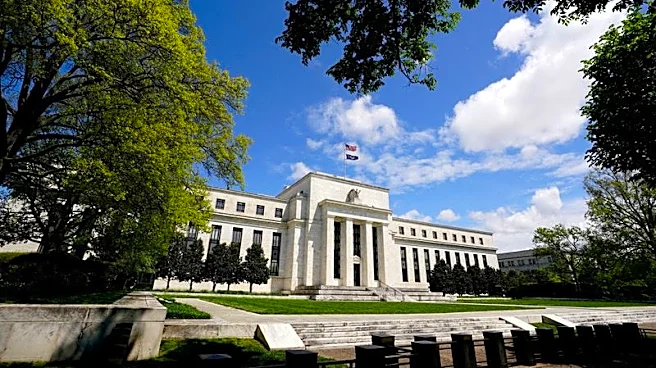
The Federal Reserve has unanimously decided to increase its benchmark federal funds rate by a quarter percentage point, setting it in a range of 3.75% to 4%. This marks the first rate hike since 2023 and is primarily aimed at curbing inflation, which
has been deemed too high for an extended period. This move aligns with Wall Street's expectations but places the Fed's Chairman, Kevin Warsh, at odds with President Trump, who has advocated for significantly lower interest rates. The U.S. annual inflation rate currently stands at 3.4%, exceeding the Federal Reserve's target of 2%. The decision reflects the Fed's commitment to restoring price stability and confidence in its ability to manage inflation. While the market had largely anticipated this increase, investors are interpreting it as the beginning of a broader tightening cycle rather than a singular adjustment.
Why It's Important?
This interest rate hike carries significant implications for the U.S. economy, particularly for borrowers and investors. Higher interest rates translate to increased borrowing costs for consumers and businesses, affecting mortgages, credit card balances, and some student loans. For instance, 30-year fixed mortgage rates have approached 7%, a level not seen since the beginning of the year. While the Fed doesn't directly control these rates, its decisions influence investor expectations for future inflation and short-term interest rates. A more restrictive monetary policy, if sustained, could restore the Fed's credibility as an inflation fighter, potentially leading to a decrease in long-term Treasury yields. Conversely, the federal debt has surpassed $40 trillion, with annual net interest costs exceeding $1 trillion, comparable to national defense spending. Higher interest rates exacerbate this issue by increasing the government's refinancing costs, demanding greater compensation for investors holding long-term Treasury securities.
What's Next?
Following this rate hike, the market will closely monitor the Federal Reserve's subsequent actions and communications. Investors will be looking for signals regarding the duration and intensity of this tightening cycle. The Fed's policy statement and any comments from officials will be crucial in determining whether the current inflation is viewed as temporary, particularly concerning oil prices, and if further rate increases are anticipated. The impact on bond yields and the dollar will also be key indicators of market interpretation. For borrowers, the immediate future likely involves continued elevated costs for loans and mortgages. The government faces increasing pressure to address its spiraling debt, with calls for a credible, multi-year plan to reduce future deficits through a combination of slower government spending growth and potentially higher tax revenue. Such fiscal measures, if implemented, could significantly influence long-term interest rates and the overall economic landscape.
Beyond the Headlines
The Federal Reserve's decision highlights a fundamental tension between monetary policy and broader economic realities. While interest rate hikes are a traditional tool to combat inflation, their effectiveness can be limited when inflation is driven by supply shocks, such as disruptions in oil supply, rather than excessive demand. Critics argue that raising rates in such scenarios could weaken unrelated sectors of the economy without resolving the root cause of inflation, potentially leading to higher fuel prices and more expensive loans simultaneously for consumers. Furthermore, the ongoing debate between the Fed's inflation-fighting mandate and presidential calls for lower rates underscores the political dimensions of monetary policy. The long-term trajectory of interest rates may be shifting towards a 'new normal' that is higher than the unusually low rates seen in recent decades, influenced by factors like inflation, economic growth, and the government's fiscal health. This shift could necessitate a re-evaluation of investment strategies and financial planning for both individuals and institutions.