






What's Happening?
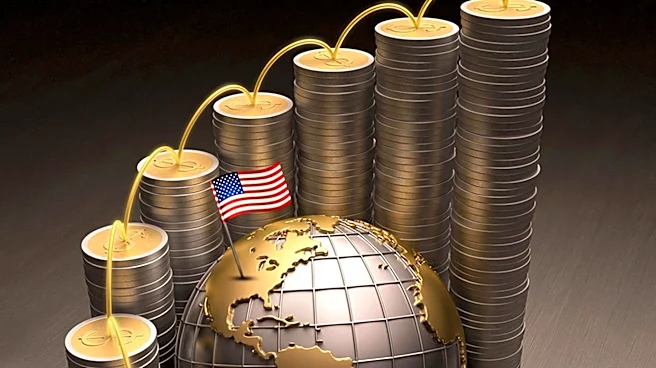
Geopolitical rivalry is influencing international business patterns, with significant shifts occurring between countries at the center of these tensions, particularly the U.S. and China. However, the overall global realignment remains modest. Since 2023,
the fragmentation of global trade has advanced only slightly, primarily due to weakened U.S.-China relations and sanctions imposed on Russia. Despite this, greenfield investment has increasingly connected countries with differing geopolitical alignments. The global economy has demonstrated considerable resilience amidst ongoing turbulence and political fragmentation. The international rules-based order is being challenged by rising geopolitical tensions, trade disputes, and global supply shocks, prompting nations to re-evaluate their partnerships and priorities. This dynamic environment suggests a complex interplay between political pressures and economic realities, where some relationships are strained while others are forged.
Why It's Important?
The shifting global trade alignments have significant implications for U.S. industries and economic stakeholders. The weakening of U.S.-China ties, a major driver of this fragmentation, directly impacts supply chains, investment strategies, and market access for American businesses. Companies that rely heavily on either the U.S. or Chinese markets, or on supply chains that traverse both, face increased uncertainty and potential disruptions. While the overall global fragmentation is limited, the targeted nature of these shifts means that specific sectors and companies could experience substantial gains or losses. For instance, industries involved in critical technologies or strategic resources may see increased domestic investment and protectionist policies, while those dependent on open global markets might face new barriers. The resilience of the global economy, despite these tensions, suggests that businesses are adapting, but the underlying geopolitical currents continue to shape the landscape for international trade and investment.
What's Next?
The trajectory of global trade will likely continue to be influenced by the evolving geopolitical landscape, particularly the relationship between the U.S. and China. Businesses and governments will need to monitor these developments closely to anticipate further shifts in trade policies, tariffs, and investment flows. The ongoing re-evaluation of international partnerships by various countries could lead to the formation of new trade blocs or alliances, potentially altering existing market dynamics. Companies may increasingly prioritize supply chain resilience and diversification to mitigate risks associated with geopolitical tensions. Furthermore, the continued challenge to the international rules-based order suggests that trade disputes and protectionist measures could become more frequent, requiring businesses to adapt to a less predictable global trading environment. The role of greenfield investment in connecting geopolitically diverse countries indicates a potential for new economic opportunities despite the broader fragmentation.
Beyond the Headlines
Beyond the immediate economic impacts, the shifting global trade alignments raise deeper questions about the future of globalization and international cooperation. The erosion of the international rules-based order, driven by geopolitical tensions, could lead to a more fragmented and less predictable global economic system. This could have long-term implications for global governance, the effectiveness of international institutions, and the potential for collective action on issues like climate change or pandemics. The emphasis on national interests and resource nationalism, as seen in the ferroalloys sector, could lead to increased competition for critical resources and technologies, potentially exacerbating international rivalries. The uneven nature of fragmentation, with significant shifts between major powers but limited global realignment, suggests a complex future where some aspects of globalization persist while others are fundamentally reshaped by geopolitical considerations.