



What's Happening?
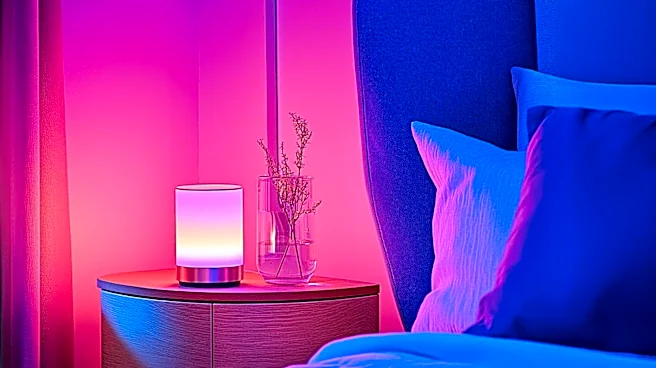
Philips Hue has announced new features for its smart lighting system, including 'Custom AI Behaviors' and an integration with Sonos speakers. These innovations, unveiled at the IFA tech show, aim to provide users with more intuitive and comprehensive
control over their smart lighting environments. Custom AI Behaviors allow users to program complex automations using natural language within the Hue app. This goes beyond simple color changes or scene settings, enabling users to describe desired lighting actions, which the AI assistant then translates into executable behaviors. George Yianni, Hue's head of technology, noted that this approach addresses the previous difficulty of building user interfaces for such rich capabilities, with large language models (LLMs) providing a solution. The feature is currently in beta and will roll out next month, requiring the processing power of the Bridge Pro. Additionally, a new integration with Sonos speakers will allow users to control Sonos devices, such as playing/pausing audio, adjusting volume, and skipping tracks, using select Hue switches like the Hue Tap Dial Switch. This Sonos integration is expected to be available via a software update in November.
Why It's Important?
The introduction of Custom AI Behaviors by Philips Hue marks a significant advancement in smart home automation, particularly for lighting systems. By enabling natural language programming, Hue is making sophisticated control more accessible to a broader user base, moving away from complex manual configurations. This could lead to increased user satisfaction and deeper integration of smart lighting into daily routines, as users can more easily tailor their environments to specific needs and preferences. The integration with Sonos speakers further enhances the smart home ecosystem by creating a more unified control experience for both lighting and audio. This convergence of smart devices simplifies user interaction and adds value to both product lines, potentially driving sales for both Philips Hue and Sonos in the U.S. market. The local processing of automations on the Bridge Pro, while the AI assistant runs in the cloud, highlights a hybrid approach to AI deployment that balances performance with privacy concerns. This development could influence how other smart home manufacturers design their AI-driven features, emphasizing user-friendly interfaces and robust integration capabilities.
What's Next?
Custom AI Behaviors are currently in beta and are scheduled to roll out next month. The automation engine powering these behaviors will also be made available to third-party developers, potentially fostering a wider ecosystem of integrated smart home solutions. The Sonos integration is slated for a software update release in November. Early next year, Philips Hue plans to launch a 'Back-up & Restore' feature, allowing users to save their bridge settings to the Hue cloud. This will enhance data security and ease of system management. The success and adoption of these new features will likely influence future product development and strategic partnerships within the smart home industry. Competitors will be observing how these AI-driven and integrated solutions resonate with consumers, potentially leading to similar offerings from other brands. The availability of the automation engine to third-party developers could also spur innovation in custom smart home applications, creating more diverse and personalized experiences for users.
Beyond the Headlines
The move towards natural language processing in smart home devices, as exemplified by Philips Hue's Custom AI Behaviors, signifies a broader trend in human-computer interaction. This development aims to make technology more intuitive and less reliant on specific commands or complex programming, mirroring how humans naturally communicate. The use of open-weight GLM family models for the AI assistant, as mentioned by George Yianni, also points to a strategic choice by Philips Hue to maintain control over the AI's behavior and avoid potential issues with closed-source models. This decision has implications for transparency, reliability, and the long-term evolution of AI in consumer products. Furthermore, the seamless integration of lighting with other smart home components like audio systems underscores the growing expectation for a cohesive and interconnected living environment. This convergence raises questions about data sharing between different smart devices and platforms, and the potential for a more 'ambient intelligence' where the home anticipates and responds to user needs without explicit commands. The ethical considerations around AI's role in personalizing home environments, including potential biases in algorithms and the extent of data collection, will become increasingly pertinent as these technologies become more sophisticated.