
What's Happening?
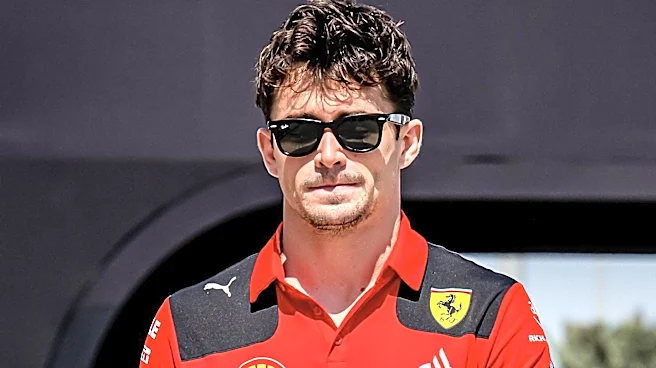
Formula 1's governing body, the Fédéderation Internationale de l'Automobile (FIA), has banned Daily Mail reporter Jonathan McEvoy from covering races in person for the remainder of the 2026 season. The ban comes after McEvoy wrote an opinion piece on November
4, criticizing Ferrari driver Charles Leclerc. In the article, McEvoy referred to Leclerc as a 'sneaky little b-----d' following an on-track incident with Lewis Hamilton during the Mexico Grand Prix. The FIA's general manager, Alberto Villarreal, informed McEvoy of the decision via letter, stating that the article 'falls short of the standards of professionalism expected of media representatives accredited to cover the FIA Formula 1 world championship.' As a result, McEvoy will not receive media credentials for the final three races of the season: the Las Vegas Grand Prix, Qatar Grand Prix, and Abu Dhabi Grand Prix.
Why It's Important?
This action by the FIA raises significant concerns about press freedom and the relationship between sports governing bodies and the media. The Daily Mail's head of sport, Chris Dean, condemned the ban as an 'unprecedented and outrageous attack on the freedom of the press,' arguing that it sets a dangerous precedent when mild criticism leads to such heavy-handed reactions. The incident highlights the tension between a journalist's right to express opinion and a sports organization's desire to maintain a certain level of decorum and professionalism from accredited media. It could lead to a chilling effect, where reporters might self-censor to avoid similar repercussions, potentially impacting the critical analysis and independent reporting within Formula 1. The decision also brings into question the subjective nature of 'professionalism standards' as interpreted by the FIA.
What's Next?
Jonathan McEvoy will be barred from attending the remaining three races of the 2026 Formula 1 season. The Daily Mail has publicly criticized the FIA's decision, suggesting a potential ongoing dispute between the media outlet and the governing body. This incident may prompt broader discussions within the sports journalism community regarding media accreditation policies and the boundaries of critical reporting. It could also lead to a review of the FIA's guidelines for media conduct, potentially clarifying what constitutes acceptable and unacceptable commentary. While the drivers' and constructors' championships for 2026 have already been determined, the controversy surrounding this ban is likely to continue to be a talking point in the Formula 1 paddock and among sports media professionals.
Beyond the Headlines
The FIA's decision to ban a reporter for critical commentary delves into deeper issues concerning the autonomy of sports journalism and the power dynamics between media and major sports organizations. It raises questions about whether sports bodies are overstepping their bounds in attempting to control narrative and protect their athletes from negative press. This situation could be seen as part of a broader trend where organizations seek to manage public perception more tightly, potentially at the expense of independent journalistic scrutiny. The incident also highlights the subjective nature of 'professionalism' in media, particularly in the context of opinion pieces, and how such standards can be wielded to silence dissent or criticism. The long-term implications could include a more cautious approach from journalists covering Formula 1, or conversely, a stronger push from media organizations to defend journalistic independence against perceived overreach by governing bodies.