




What's Happening?
Archer Aviation, a company specializing in electric vertical takeoff and landing (eVTOL) aircraft, reported a revenue of $300,000 for the fiscal year 2025, alongside a net loss of approximately $618.2 million. The company is in its pre-commercial phase,
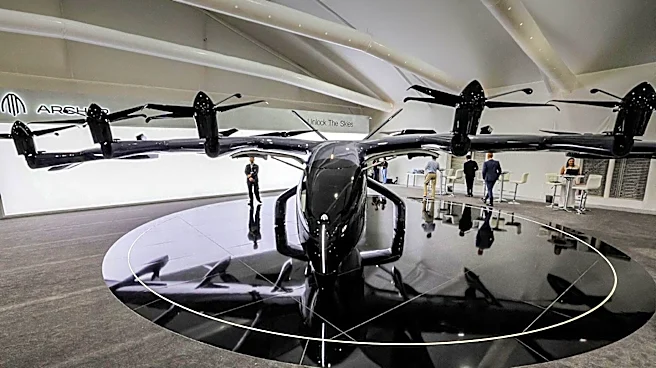
focusing on its Midnight model for urban air-taxi services. Archer has a conditional purchase agreement with United Airlines for up to $1 billion in aircraft and is collaborating with the U.S. Air Force and Anduril Industries for defense projects. Despite these partnerships, Archer faces significant financial challenges, including a high debt-to-equity ratio and negative free cash flow. Analysts predict that Archer will turn its first profit in 2030, with projected revenues of $2.3 billion.
Why It's Important?
The financial struggles of Archer Aviation underscore the challenges faced by companies in the emerging electric aircraft market. The high costs associated with developing and certifying new aircraft technologies, coupled with the need for substantial capital investment, pose significant risks. Archer's reliance on a few key partnerships, such as with United Airlines and the U.S. Air Force, adds to its financial vulnerability. The company's ability to secure additional funding and successfully scale its operations will be crucial for its long-term viability. The outcome of Archer's efforts could have broader implications for the future of urban air mobility and the adoption of eVTOL technology.
What's Next?
Archer Aviation is working to scale up its manufacturing capabilities, aiming to produce up to 50 planes a year. The company plans to focus initially on military and cargo uses for its aircraft, which could provide an easier path to early revenue. Archer is also refurbishing a small Los Angeles airport for use as a testing ground. The success of these initiatives will depend on Archer's ability to navigate regulatory hurdles and secure the necessary capital to fund its expansion. The company's progress will be closely watched by investors and industry stakeholders as a barometer for the viability of the eVTOL market.