


What's Happening?
Refik Anadol's latest project, Dataland, is redefining the contemporary art scene with its immersive AI-driven experiences. Unlike traditional art museums, Dataland offers a dynamic environment where visitors' biometric data influences the visual displays,
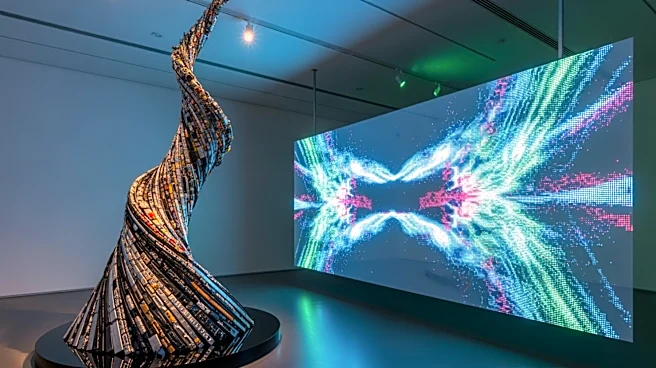
creating a personalized experience. The exhibition, titled 'Machine Dreams: Rainforest,' utilizes Anadol's Large Nature Model to expand beyond typical rainforest motifs into a machine dream space. Visitors are equipped with neckbraces and bracelets that monitor their biometric data, which then informs the visuals they encounter. This innovative approach allows each visitor to experience a unique version of the exhibition, akin to a personalized generative NFT. The experience is designed to engage all senses, offering operatic visual music and even incorporating scents. Dataland is positioned as a groundbreaking step in the evolution of art, moving beyond static displays to create an interactive, sensory-rich environment.
Why It's Important?
Dataland represents a significant shift in how art is experienced and consumed, highlighting the growing trend of immersive and interactive exhibitions. This approach not only challenges traditional notions of art but also aligns with the increasing demand for experiential content in a media-saturated world. By integrating AI and biometric data, Anadol's work pushes the boundaries of art, offering a glimpse into the future of personalized and dynamic art experiences. This could influence how museums and galleries approach exhibitions, potentially leading to more interactive and engaging displays that attract a broader audience. The use of technology in art also raises questions about the role of data in creative processes and the potential for AI to create alternative realities, offering new ways to engage with art and culture.
What's Next?
As Dataland continues to attract visitors, it may inspire other artists and institutions to explore similar immersive experiences. The success of such exhibitions could lead to increased investment in technology-driven art projects, encouraging collaborations between artists, technologists, and data scientists. Additionally, the integration of biometric data in art could spark discussions about privacy and the ethical implications of using personal data in creative contexts. As the art world adapts to these new possibilities, we may see a shift towards more personalized and interactive art forms, potentially transforming how art is created, displayed, and appreciated.
Beyond the Headlines
Dataland's use of biometric data and AI not only enhances the visitor experience but also raises important questions about the future of art and technology. The project challenges the traditional boundaries of art, suggesting that the future of creativity may lie in the ability to construct alternative realities rather than merely representing the existing one. This shift could have profound implications for how we understand and engage with art, as well as how we perceive reality itself. As technology continues to evolve, the art world may increasingly embrace these tools to create new forms of expression and engagement, potentially leading to a redefinition of what art can be.