







What's Happening?
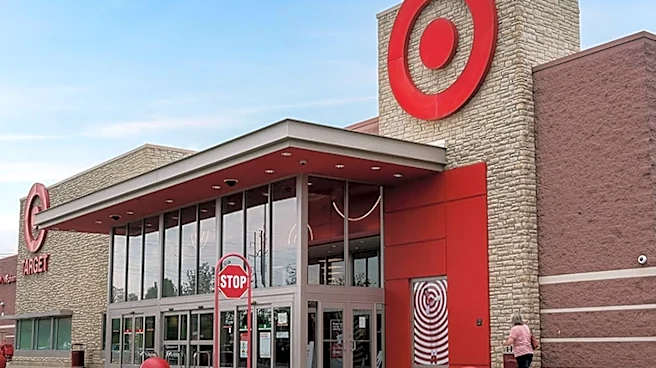
Target is deploying an unconventional cooling technology across 21 of its stores, utilizing over 600 rooftop panels that resemble solar panels but produce no electricity. These panels are designed for radiative cooling, sending heat directly into outer
space through a specific atmospheric window. Water and glycol circulate through these mirrors, returning colder than the ambient air, even in hot climates like Texas. This technology, developed by SkyCool Systems based on Stanford research, reflects 97% of incoming sunlight while emitting heat in the 8-13 micron infrared band, where the atmosphere is largely transparent. Target began testing these panels in 2021 and plans to install them at 16 more sites in 2026. The panels connect to the store's refrigeration system, either subcooling liquid refrigerant or precooling the condenser, leading to significant energy savings and improved efficiency, particularly for transcritical CO2 refrigeration systems.
Why It's Important?
This innovative cooling solution has significant implications for the U.S. retail and cold storage industries, which face substantial energy costs for refrigeration. By reducing the load on conventional condensers, the SkyCool panels can cut energy consumption by up to 20% and lower peak demand, translating into considerable operational savings. This is particularly relevant given the recent changes in EPA regulations, which, while extending deadlines for phasing out high-warming refrigerants, still maintain caps on HFC production and import. The radiative cooling technology offers a 'future-proof' solution as it is compatible with various refrigerants, allowing stores to upgrade their cooling systems without replacing the panels. This could help businesses comply with environmental regulations more cost-effectively and reduce their carbon footprint, contributing to broader sustainability goals in the commercial sector.
What's Next?
Target's continued rollout of these panels, with 16 more sites planned for 2026, indicates a growing confidence in the technology's effectiveness. The stated goal for 2026 is to install enough panels on one roof to entirely eliminate the need for an air-cooled condenser, which would represent a major breakthrough in commercial refrigeration. The company will be closely monitoring the energy savings and performance, particularly in hot climates. As manufacturing scales, the cost of these systems is expected to decrease, making them more accessible to a wider range of businesses. The success of Target's implementation could encourage other large retailers and cold storage operators to adopt similar radiative cooling solutions, potentially transforming the energy landscape for commercial refrigeration across the U.S. and beyond.
Beyond the Headlines
The adoption of radiative cooling technology by a major retailer like Target highlights a broader trend towards passive and low-energy solutions for thermal management. This technology leverages fundamental physics to achieve cooling without active power input, offering a sustainable alternative to traditional energy-intensive air conditioning and refrigeration. Its effectiveness in dry climates suggests potential for widespread application in the Sun Belt states, where cooling demands are highest. Beyond retail, this technology could be adapted for data centers, industrial processes, and even residential buildings, significantly reducing global energy consumption and greenhouse gas emissions. The challenge lies in scaling production and overcoming initial cost barriers, but the long-term benefits in terms of energy independence and environmental impact are substantial. This innovation represents a quiet revolution in how we think about and manage heat in our built environment.