
What's Happening?
AT&T CEO John Stankey has addressed concerns on Wall Street regarding Elon Musk's Starlink potentially disrupting traditional wireless operators like AT&T, Verizon, and T-Mobile. Stankey acknowledges that
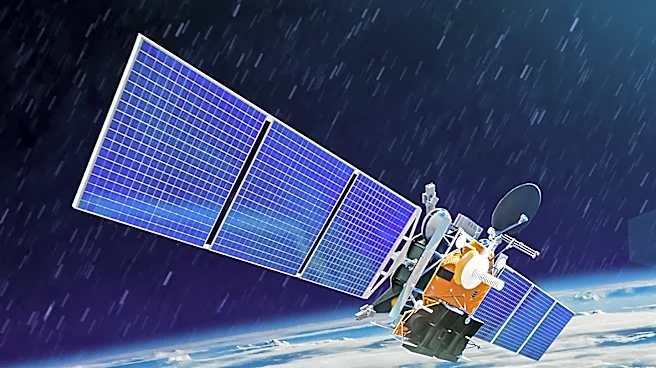
Starlink, following its acquisition of terrestrial spectrum and rapid satellite deployment, is laying groundwork for a standalone cellular network and direct-to-cell capabilities. This expansion threatens traditional carriers' high-margin enterprise, emergency service, and rural subscriber bases, as well as international roaming revenues. However, Stankey emphasized Starlink's limitations, noting it "doesn't get through buildings very well" and performs optimally with a line of sight. He believes AT&T is uniquely positioned to meet customer expectations for network performance, especially in dense urban environments and large venues. Stankey foresees a "complementary dynamic," where Starlink will find solutions in specific niches like airlines, rural areas, and IoT applications for outdoor vehicles, while traditional carriers aggregate traffic for satellite operators.
Why It's Important?
This statement from AT&T's CEO is important as it provides a leading industry perspective on the evolving competitive landscape in the U.S. wireless market. The potential entry of Starlink as a direct mobile competitor has generated significant concern among investors, impacting the stock performance of established carriers. Stankey's assessment offers a nuanced view, suggesting that while Starlink will present competition in certain segments, it may also create opportunities for collaboration or complementary services. This dynamic could lead to a more diversified and specialized wireless ecosystem, benefiting consumers with tailored solutions for different connectivity needs. It also highlights the strategic adjustments traditional telecommunication companies are making to adapt to new technologies and market entrants, potentially influencing future investment and service development in the sector.
What's Next?
The U.S. wireless market is likely to see continued strategic maneuvering from both established carriers and new entrants like Starlink. Traditional operators such as AT&T will likely focus on leveraging their existing infrastructure and low-band spectrum for strong building penetration and high-density areas, while exploring partnerships with satellite providers for niche applications. Starlink is expected to continue its deployment of advanced satellites and terrestrial spectrum, aiming to expand its direct-to-cell capabilities and standalone cellular network. This will likely intensify competition in rural broadband, enterprise, and emergency service sectors. The "complementary dynamic" suggested by Stankey could lead to new business models, where traditional carriers act as aggregators for satellite services, or where satellite providers fill gaps in coverage that are uneconomical for terrestrial networks. Investors will closely monitor the market share shifts and technological advancements from all players.
Beyond the Headlines
The emergence of satellite-based internet and cellular services, exemplified by Starlink, represents a significant technological shift with broader implications for digital inclusion and infrastructure development in the U.S. While urban areas are well-served by traditional networks, remote and rural regions often lack reliable high-speed internet. Starlink's capabilities could bridge this digital divide, offering connectivity to underserved populations and industries. However, this also raises questions about regulatory frameworks, spectrum allocation, and fair competition. The interplay between terrestrial and satellite networks could redefine the concept of universal access to communication, potentially leading to innovative hybrid solutions. Furthermore, the increasing reliance on space-based infrastructure for critical communication services could introduce new cybersecurity and national security considerations, requiring robust policy responses to ensure resilience and protection.