




What's Happening?
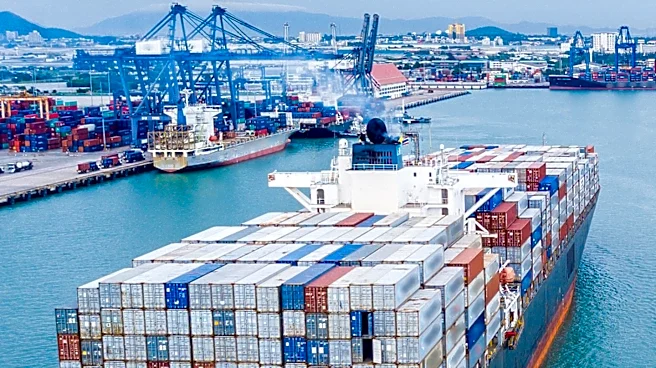
J.B. Hunt Transport Services, a major U.S. transportation and logistics company, is actively managing its intermodal and trucking operations in response to evolving U.S.-China trade flows. The company, with a market capitalization of US$21.5 billion,
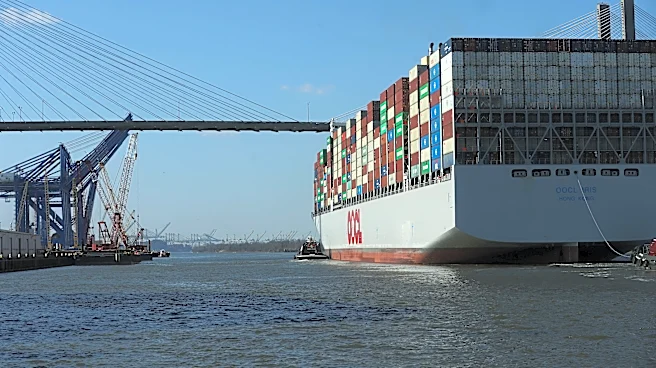
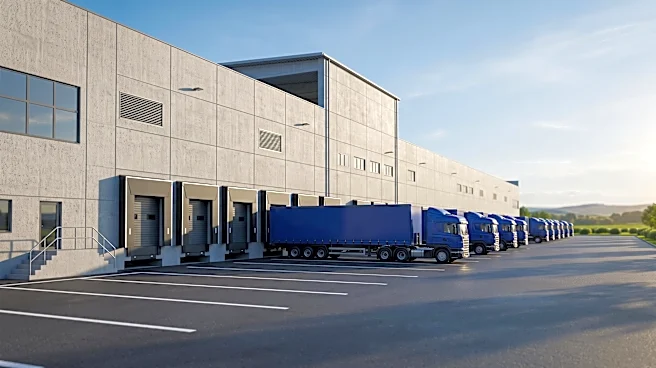
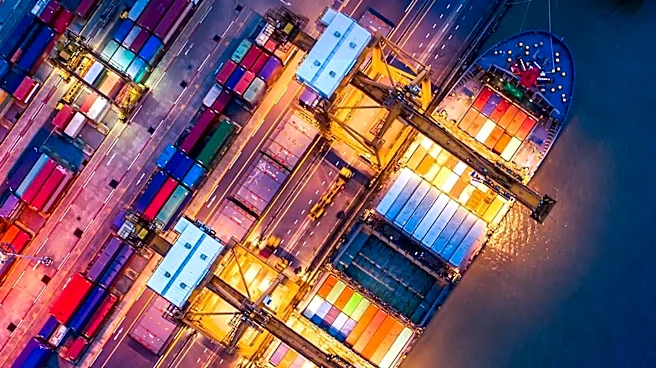
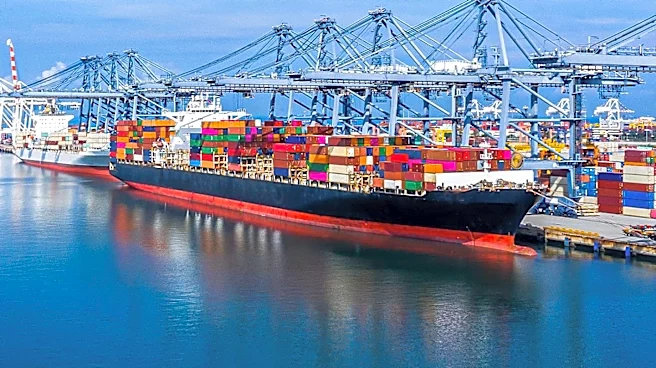
connects ports, rail, and highways across the United States for shippers. Its operations are significantly influenced by tariff relief discussions between the U.S. and China, which are reshaping the economics of moving various goods, from raw materials to manufactured products. J.B. Hunt's revenue streams include approximately US$6.3 billion from Intermodal services, US$3.5 billion from Dedicated Contract Services, and US$1.3 billion from Integrated Capacity Solutions, contributing to a total of US$12.7 billion within the United States. The company is strategically positioned to adapt to changes in container flows and contract decisions as shippers re-evaluate their logistics between Asia, U.S. ports, and inland hubs. Efforts to improve equipment utilization and reduce empty move costs are central to enhancing operational efficiencies and positively impacting net margins.
Why It's Important?
The shifts in U.S.-China trade policies and tariff relief directly impact the operational landscape and profitability of major U.S. logistics providers like J.B. Hunt Transport Services. As trade flows change, the demand for specific transportation services, pricing power, and contract structures within the freight industry are all affected. For J.B. Hunt, optimizing equipment utilization and minimizing empty moves are critical to maintaining competitive margins in a dynamic market. The company's ability to adapt to these changes will influence its financial performance and market position. Investors and stakeholders in the U.S. transportation sector are closely watching how these trade dynamics translate into tangible outcomes for freight volumes, operational costs, and ultimately, the bottom line of companies like J.B. Hunt. The broader U.S. economy relies heavily on efficient logistics, making J.B. Hunt's strategic responses to international trade shifts a key indicator for supply chain stability and economic activity.
What's Next?
J.B. Hunt Transport Services will likely continue to focus on improving operational efficiencies, particularly in equipment utilization and reducing empty move costs, to enhance net margins amidst ongoing trade flow adjustments. The company's future performance will hinge on how unresolved cost pressures interact with these efficiency improvements. Analysts and investors will be observing how contract structures, pricing power, and shifts in trade lanes accelerate or decelerate under the surface of these broader trade discussions. The company's ability to navigate these complexities will determine its financial trajectory. Furthermore, J.B. Hunt may explore new strategies to capitalize on emerging trade routes and evolving shipper demands, potentially leading to adjustments in its service offerings and network optimization. The company's proactive measures in adapting to these changes will be crucial for sustained growth and profitability.
Beyond the Headlines
Beyond the immediate financial implications, the evolving U.S.-China trade landscape and J.B. Hunt's response highlight deeper shifts in global supply chain management. The emphasis on operational efficiency, such as improving equipment utilization and reducing empty move costs, reflects a broader industry trend towards sustainability and cost-effectiveness. This focus can lead to innovations in logistics technology and infrastructure, potentially setting new standards for the transportation sector. Furthermore, the strategic decisions made by large carriers like J.B. Hunt in response to trade policy changes can influence regional economic development within the U.S., impacting employment, infrastructure investment, and the competitiveness of various industries. The interplay between international trade policies and domestic logistics operations underscores the interconnectedness of global commerce and its far-reaching effects on national economies and business practices.