










What's Happening?
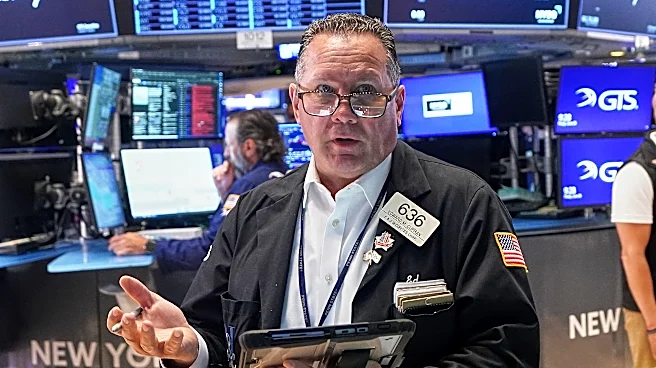
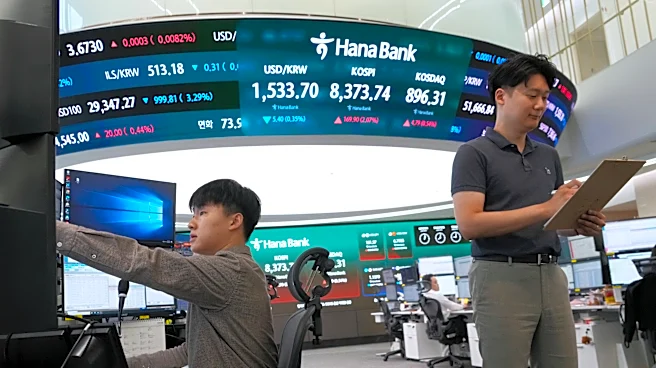
The U.S. stock market experienced volatility on Friday, primarily driven by concerns in the technology sector. Semiconductor stocks saw a decline following reports of a potential delay in OpenAI's initial public offering (IPO), which added to the market's
challenges this week. The Nasdaq Composite fell by 0.2%, and the S&P 500 also saw a slight decrease, with both indexes ending the week with losses of over 4% and nearly 2%, respectively. The Dow Jones Industrial Average, less tech-heavy, managed a slight weekly gain. The market's unease is compounded by rising costs of memory and storage components, affecting device manufacturers like Apple, which recently increased prices for its MacBooks and iPads. Additionally, the Federal Reserve's potential interest-rate hike, spurred by a high reading of the Personal Consumption Expenditures index, is contributing to the pressure on tech stocks.
Why It's Important?
The current market dynamics highlight the sensitivity of the tech sector to both macroeconomic factors and specific industry developments. The potential delay of OpenAI's IPO reflects broader uncertainties in the AI and tech markets, which are already under pressure from rising component costs and potential interest rate hikes. These factors could impact investor confidence and the valuation of tech companies, influencing investment strategies and market stability. The situation underscores the interconnectedness of global economic indicators, corporate decisions, and market performance, with significant implications for investors and stakeholders in the tech industry.
What's Next?
Looking ahead, market participants will closely monitor developments related to OpenAI's IPO and the Federal Reserve's interest rate decisions. The tech sector's response to these factors will be critical in determining market trends. Additionally, geopolitical events, such as the situation in the Strait of Hormuz, could further influence market dynamics, particularly in the energy sector. Investors may need to adjust their portfolios to mitigate risks associated with these uncertainties, while companies in the tech industry might explore strategies to manage rising costs and maintain competitiveness.