







What's Happening?
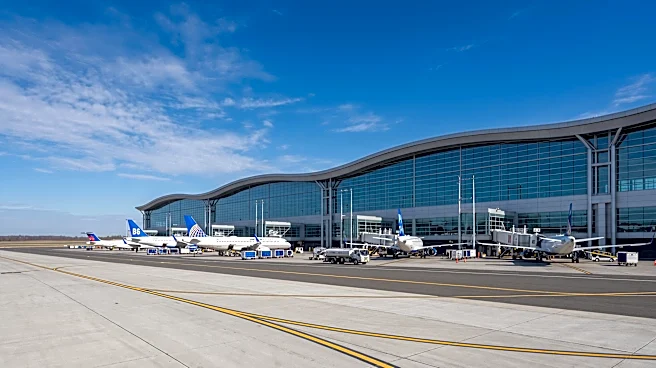
The Port Authority of New York and New Jersey has approved a $110 million expansion for Terminal A at Newark Liberty International Airport (EWR). This project will add eight new gates to the terminal, which opened in 2023. The expansion is a direct response
to passenger demand significantly exceeding initial projections; Terminal A was designed to handle approximately 13.6 million travelers annually but saw around 18 million passengers in 2024. The $110 million will be allocated to two distinct projects: a $100 million southern expansion that will introduce two common-use gates by 2029, and a $10 million northern expansion for planning and construction of six additional common-use gates, slated to open in phases between 2030 and 2032. The southern expansion, commencing in 2027, will create 25,000 square feet of new space, including seating areas, restrooms, and quick-service food options. This initiative is part of the broader EWR Vision Plan, which also encompasses the replacement of Terminal B, upgrades to Terminal C, and the construction of a new $3.5 billion AirTrain system expected to be operational by 2030.
Why It's Important?
This expansion is crucial for accommodating the rapidly growing passenger volume at Newark Liberty International Airport, a key transportation hub for the New York metropolitan area. The significant increase in passenger traffic, nearly 40% above original forecasts for Terminal A, highlights the urgent need for infrastructure upgrades to maintain operational efficiency and passenger experience. The project is expected to generate substantial economic benefits, including the creation of jobs. The southern expansion alone is projected to create 750 job-years, generate $76.6 million in wages, and contribute $173 million in economic activity. The planning phase for the northern expansion is anticipated to add 70 job-years, $7.7 million in wages, and $17.3 million in economic activity. These figures underscore the project's role in stimulating local and regional economies. Furthermore, the expansion reinforces Newark Airport's commitment to modernizing its facilities, following Terminal A's recognition as the World's Best New Airport Terminal and a five-star rating by Skytrax in 2024, ensuring it continues to meet the demands of a world-class airport.
What's Next?
Construction on the southern expansion of Terminal A is scheduled to begin in 2027, with the two new gates expected to be operational by 2029. Planning for the northern expansion, which will add six gates, is already underway, with these gates opening in stages from 2030 through 2032. These projects are integral components of the larger EWR Vision Plan, which aims to transform the entire airport infrastructure. Future developments under this plan include the replacement of Terminal B, comprehensive upgrades to Terminal C, and the completion of a new $3.5 billion AirTrain system, anticipated to be fully operational by 2030. Additionally, the EWR Vision Plan involves redesigning roadways and taxiway networks to alleviate delays and enhance aircraft capacity. These ongoing and upcoming projects signify a continuous effort to modernize and expand Newark Airport's capabilities to meet future travel demands and maintain its status as a premier international gateway.
Beyond the Headlines
The expansion of Newark Liberty International Airport's Terminal A reflects a broader trend in the aviation industry where major hubs are struggling to keep pace with surging passenger volumes. This situation often leads to significant investments in infrastructure, which, while necessary, also raise questions about long-term sustainability and environmental impact. The focus on 'common-use gates' suggests a strategic move towards greater operational flexibility, allowing various airlines to utilize the new facilities, which can optimize gate assignments and potentially reduce delays. The economic impact, measured in job-years and economic activity, highlights the critical role of large-scale infrastructure projects in regional development and employment. However, such expansions also bring challenges related to managing construction impacts on ongoing airport operations, potential disruptions for travelers, and the need for continuous adaptation to evolving travel patterns and technological advancements in airport management. The success of these projects will depend not only on their timely completion but also on their ability to integrate seamlessly into the existing complex airport ecosystem.