




What's Happening?
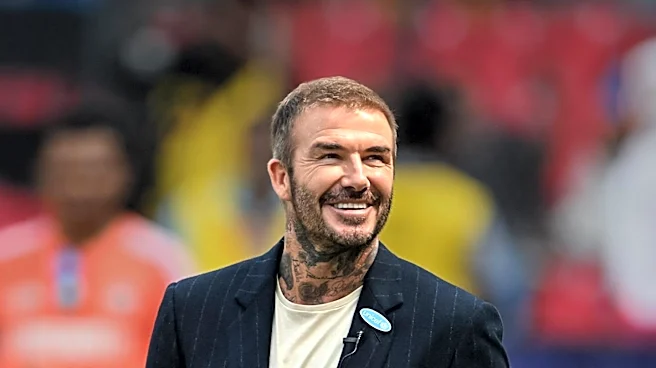
Stefano D’Anna, president of Footballco, has highlighted the issue of homogeneity in World Cup marketing, using the example of pink football boots to illustrate the problem. He argues that while pink boots stand out visually, the widespread adoption of similar
marketing strategies by brands has led to a lack of differentiation. D’Anna notes that many brands are using the same players, creators, and cinematic launch films, which results in campaigns that fail to resonate with football fans. He emphasizes that while campaigns can create anticipation, they often lack the lasting impact of content that responds to real-time events. According to D’Anna, the brands that will be remembered are those that manage to stay relevant throughout the tournament, rather than those with the biggest initial splash.
Why It's Important?
The critique of World Cup marketing homogeneity is significant as it underscores the challenges brands face in standing out in a crowded advertising space. With the World Cup being one of the largest global sporting events, brands have a unique opportunity to connect with a massive audience. However, the tendency to rely on similar marketing strategies can lead to a lack of differentiation, reducing the effectiveness of campaigns. This situation highlights the need for brands to innovate and create content that resonates with fans, rather than focusing solely on industry accolades. The insights from D’Anna suggest that brands need to prioritize real-time engagement and creativity to truly capture the attention of their target audience.
What's Next?
As the World Cup progresses, brands may need to reassess their marketing strategies to ensure they are effectively engaging with fans. This could involve shifting focus from pre-planned campaigns to more dynamic content that responds to the unfolding events of the tournament. Brands might also explore collaborations with creators who can provide authentic and timely content that resonates with fans. Additionally, the lessons learned from this World Cup could influence marketing strategies for future tournaments, including the upcoming Women’s World Cup in Brazil. Brands may need to consider how they can differentiate themselves in a market that is prone to sameness and clichés.
Beyond the Headlines
The issue of marketing homogeneity at the World Cup also raises broader questions about the role of creativity and innovation in advertising. As brands compete for attention in a saturated market, there is a growing need to balance industry expectations with genuine audience engagement. This situation highlights the importance of understanding cultural nuances and fan behavior to create campaigns that truly resonate. Furthermore, the emphasis on real-time content suggests a shift towards more agile marketing strategies that can adapt to changing circumstances. This approach could lead to long-term shifts in how brands approach major sporting events, prioritizing authenticity and relevance over traditional campaign metrics.