




What's Happening?
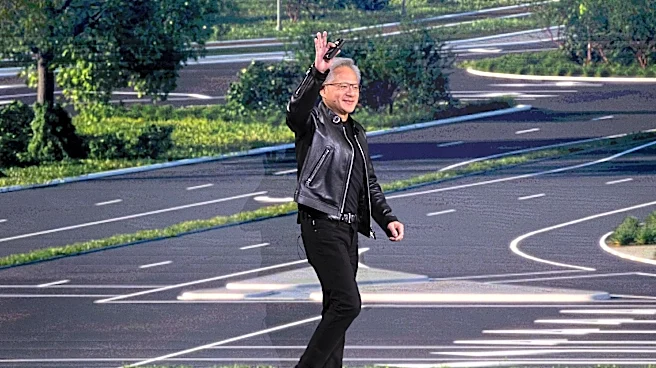
Jensen Huang, CEO of NVIDIA, resigned on November 12, 2026, following what Ben Thompson describes as compliance failures related to U.S. chip export controls to China. Thompson's analysis, presented as an 'obituary' for Huang's tenure, suggests that Huang's departure
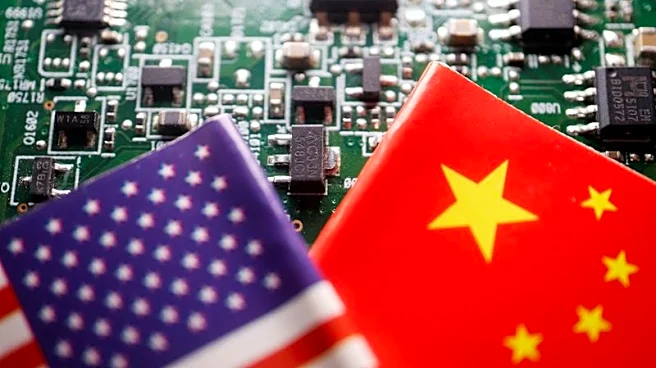
was a consequence of his inability to adapt NVIDIA's operations to new U.S. government policies that reclassified AI technology as a national security concern, rather than a normal commercial product. NVIDIA had previously shipped A800 chips to China, a modified version of the A100, which Thompson characterizes as doing 'the bare minimum to abide by the letter of the law, never the spirit.' Treasury Secretary Scott Bessent reportedly pressured NVIDIA's board regarding compliance, drawing parallels to banking regulations where ignorance is not a defense. The situation highlights a significant shift in how the U.S. government views and regulates advanced technology exports, particularly concerning AI and its implications for national security.
Why It's Important?
This event signifies a critical turning point for the U.S. technology sector, particularly for companies operating in the AI and semiconductor industries. The U.S. government's increased scrutiny and enforcement of chip export controls to China indicate a broader strategy to limit China's access to advanced AI capabilities, impacting global supply chains and market dynamics. For U.S. tech companies, this means a fundamental shift from a market-led approach to one heavily influenced by national security and compliance. The 'bank-style compliance regime' described by Thompson suggests that tech companies will face stricter oversight, potentially leading to higher operational costs and reduced market access in certain regions. This could disadvantage U.S. companies that have historically relied on global markets, including China, for significant portions of their revenue. The departure of a long-standing CEO like Huang underscores the severity of this policy shift and its potential to reshape corporate leadership and strategic direction within the tech industry.
What's Next?
The immediate future will likely see increased pressure on U.S. tech companies to align their global operations with evolving national security policies. NVIDIA, now without its founder-CEO, faces the challenge of navigating a new regulatory landscape while maintaining its competitive edge. Thompson suggests that three of NVIDIA's four 'moats'—CUDA/software platform, networking and systems, and organizational structure—may weaken without Huang's leadership, potentially impacting its market dominance. The financing structure of the AI build-out, particularly for 'Neo Clouds' that rely on NVIDIA's chips, could also face instability as debt becomes more expensive and equity less valuable. Furthermore, the U.S. government, through agencies like the Treasury and Commerce Departments, is expected to continue refining and enforcing export controls, potentially blacklisting more entities and closing loopholes. The long-term implications include a potential acceleration of China's indigenous AI ecosystem, as restrictions on U.S. chips could incentivize China to develop its own alternatives, eventually competing globally.
Beyond the Headlines
The resignation of Jensen Huang and the surrounding circumstances highlight a profound ideological clash between the traditional model of independent American tech companies and the growing demands of national security. Thompson argues that the 'post-1968 model of the independent American tech company,' which prioritized market-led innovation and global reach, is now under threat. The U.S. government's decision to treat AI as an 'exceptional' technology, rather than a 'normal' one, fundamentally alters the operating environment for tech giants. This shift raises ethical and legal questions about the extent of government intervention in private enterprise and the balance between economic competitiveness and national security. The narrative also touches on the 'American exceptionalism' embodied by Huang, suggesting that the very qualities that led to his success—risk-taking and a focus on business above all else—became liabilities in a new geopolitical context. This development could lead to a re-evaluation of corporate governance, risk management, and the role of tech leadership in an era of heightened geopolitical tensions.