
What's Happening?
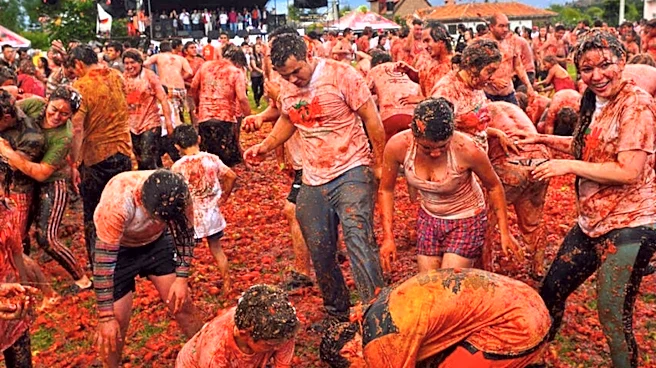
La Tomatina is an annual festival held in Buñol, Spain, where thousands of participants engage in a massive food fight using tomatoes. This unique event involves people throwing tomatoes at each other
for approximately one hour. The festival is a significant cultural tradition in Spain, often highlighted when discussing Spanish celebrations and customs. It is characterized by its chaotic yet festive atmosphere, drawing both locals and international visitors to the small town. The event is typically held in August, transforming the streets of Buñol into a red, pulpy arena. While the exact origins are debated, it has grown into a globally recognized spectacle, symbolizing a unique form of communal celebration and release. The festival is often cited as an example of Spain's vibrant and sometimes unconventional cultural heritage, alongside other well-known events like San Fermín (the running of the bulls) and Las Fallas.
Why It's Important?
La Tomatina holds cultural significance as a distinctive Spanish tradition that attracts global attention, contributing to Spain's tourism industry and cultural identity. For participants, it offers a unique, cathartic experience of collective joy and playful aggression. Economically, the festival brings revenue to Buñol through tourism, accommodation, and local businesses, despite the seemingly wasteful nature of the event. It also serves as a cultural ambassador for Spain, showcasing its festive spirit and ability to host large-scale, unconventional events. The festival's global recognition helps to maintain interest in Spanish culture and language, as it is often featured in discussions about international celebrations and traditions. Its importance also lies in its ability to foster a sense of community and shared experience among diverse groups of people who come together for this singular event.
What's Next?
As an annual event, La Tomatina is expected to continue in Buñol, Spain, in its traditional format. Future iterations will likely maintain the core activity of the tomato fight, drawing participants from around the world. Organizers will continue to manage the logistics, including the supply of tomatoes, safety measures, and crowd control, to ensure the event runs smoothly. The festival's enduring popularity suggests that it will remain a fixture in Spain's cultural calendar, with ongoing efforts to promote it internationally. Discussions may arise regarding sustainability and the environmental impact of using large quantities of tomatoes, potentially leading to future adjustments or initiatives to mitigate such concerns. However, the fundamental nature of the festival is anticipated to remain consistent, preserving its unique appeal and cultural heritage.
Beyond the Headlines
Beyond its immediate spectacle, La Tomatina raises broader questions about cultural expression, waste, and the commercialization of traditional events. The use of thousands of kilograms of tomatoes for a food fight often sparks debate regarding food waste, especially in a world facing food insecurity. This tension between cultural celebration and resource management highlights a modern dilemma for many traditional festivals. Furthermore, the festival's global popularity has led to increased commercialization, with tickets, merchandise, and tourism packages becoming significant aspects of the event. This commercialization can alter the authentic, local feel of the tradition, transforming it into a more curated experience for tourists. The event also serves as a case study in how communities adapt and sustain unique traditions in the face of global scrutiny and evolving societal values, balancing preservation with contemporary concerns.