









What's Happening?
The comic series 'Coyote,' created by writer Steve Englehart and artist Marshall Rogers, is being recognized for its unique place in comic book history. Originating in 1981 with Eclipse Comics and later continuing under Marvel's Epic Comics imprint, 'Coyote'
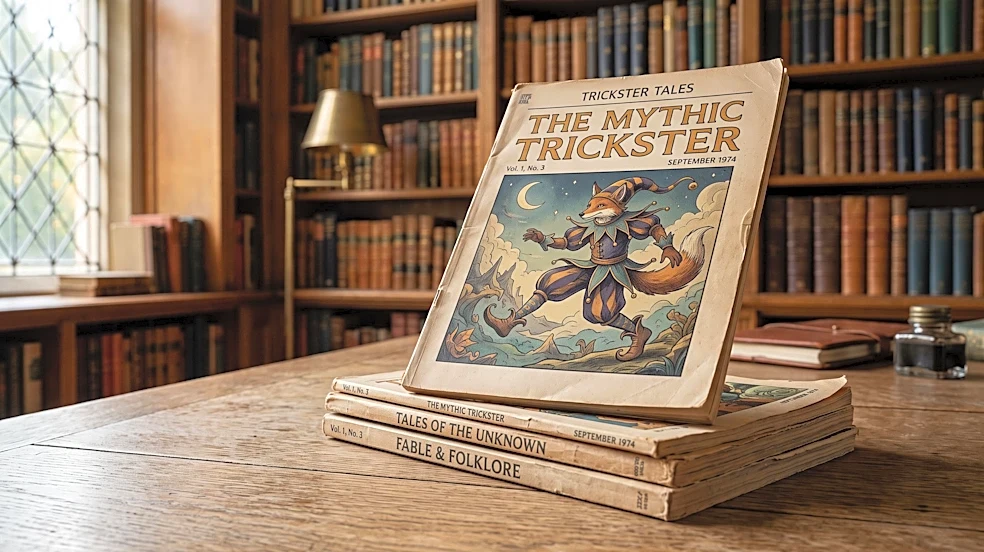
diverged from traditional superhero narratives by drawing inspiration from Native American trickster figures. The protagonist, Sylvester 'Sly' Xavier Santangelo, gains abilities rooted in mythology and otherworldly forces, allowing for shape-shifting and interdimensional travel. The series was known for its unpredictable protagonist, who was often impulsive and mischievous, and for combining diverse genres including supernatural creatures, secret societies, and political conspiracies. A notable aspect of the series was its ambitious storyline, which culminated in a plot involving Soviet leader Mikhail Gorbachev, the Shadow Cabinet, and an attempt to replace President Ronald Reagan with a clone. The series also provided an early professional opportunity for artist Todd McFarlane, who contributed artwork to issues #11 and #12, years before his rise to fame with 'The Amazing Spider-Man' and 'Spawn.'
Why It's Important?
The 'Coyote' comic series is significant for its role in the evolution of American comic books, particularly in fostering creator-owned properties and pushing the boundaries of traditional superhero storytelling. Its publication under Marvel's Epic Comics imprint demonstrated a willingness to support material outside the mainstream superhero universe, offering creators greater artistic freedom. This approach allowed for the exploration of mature themes, complex characters, and unconventional narratives that blended mythology, sexuality, politics, and metaphysical concepts. The series' willingness to combine seemingly unrelated genres, such as supernatural elements with political satire, set it apart from its contemporaries. Furthermore, 'Coyote' served as a crucial early platform for Todd McFarlane, whose contributions to the series marked his professional debut in comics. This early work on a creator-owned title foreshadowed his later success as a key figure in the independent comic book movement of the 1990s, particularly with the founding of Image Comics and the creation of 'Spawn.'
What's Next?
While the original 'Coyote' series concluded in 1986, its legacy has been revisited through collected editions. In 2005, Image Comics began reprinting the original material in a five-volume 'Coyote Collection,' which included the Eclipse material and all 16 issues of the Epic series, along with related features like Scorpio Rose and Djinn. These collections have allowed comic book historians and new readers to rediscover the series and appreciate its historical significance. The re-release of 'Coyote' material highlights a continuing trend in the comic book industry to preserve and reintroduce influential, albeit commercially less successful, creator-owned properties. This suggests a potential for further re-evaluation of such works, possibly leading to new interpretations or adaptations in other media, as the industry continues to explore its rich history and diverse storytelling approaches.
Beyond the Headlines
The 'Coyote' series represents a deeper shift in the comic book industry towards greater creator ownership and artistic independence, a movement that gained significant momentum in the 1980s and 1990s. By challenging established storytelling conventions and incorporating complex themes, 'Coyote' demonstrated that superhero comics could be a vehicle for sophisticated narratives beyond simple good-versus-evil tropes. Its blend of mythological trickster archetypes with contemporary political intrigue offered a commentary on power, deception, and the disruption of established order, reflecting broader societal anxieties of the time. The series' imperfections, including changes in artistic direction and production difficulties, underscore the challenges inherent in ambitious, creator-driven projects. Ultimately, 'Coyote' stands as a testament to the value of creative freedom and the enduring impact of stories that dare to be different, influencing subsequent generations of comic creators and contributing to the diverse landscape of modern comics.