





What's Happening?
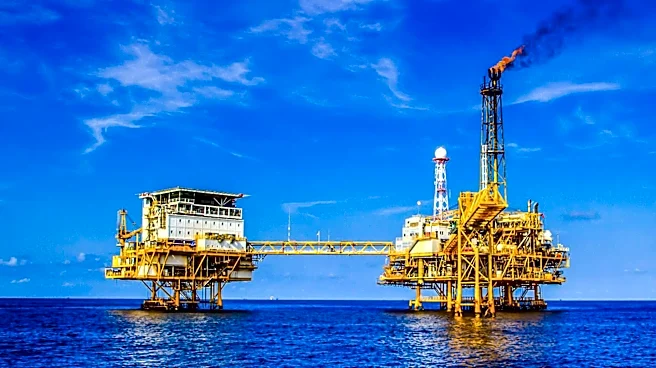
Offshore Data Center LLC has announced a partnership with Houston-based Riverway Group to design and build offshore platforms that will utilize stranded or undervalued natural gas to power data centers directly at the source. This collaboration aims to monetize
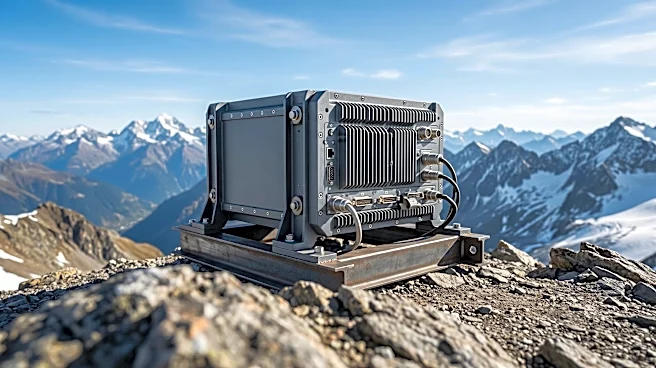
gas resources that are currently uneconomical to develop through conventional means, such as those requiring extensive pipeline infrastructure. According to Art Schroeder, CEO of Offshore Data Center, placing data centers next to the gas supply eliminates the need for pipelines to shore and transmission lines, while also significantly reducing cooling costs by using closed-loop deep-ocean cooling systems. The platforms will incorporate semisubmersible hull designs from Horton do Brasil and Riverway’s advanced fabrication methods, resulting in lighter, more stable hulls that can be cost-competitively built on the U.S. Gulf Coast. These facilities will range from large-scale AI training centers up to 1 GW to smaller setups for edge computing, and can also support gas-to-ammonia or gas-to-methanol conversion.
Why It's Important?
This initiative holds significant importance for the U.S. energy sector, technology industry, and maritime manufacturing. By monetizing stranded gas, it offers a new revenue stream for energy producers and enhances domestic energy development, reducing waste. For the technology sector, particularly in artificial intelligence, it provides a novel solution for expanding computing capacity with a potentially lower carbon footprint due to the utilization of otherwise flared or reinjected gas and efficient cooling. The construction of these platforms in the U.S. Gulf Coast strengthens domestic maritime manufacturing capabilities, creating jobs and fostering innovation in advanced fabrication. This project could also set a precedent for sustainable data center development, addressing the growing energy demands of AI and other high-performance computing needs while leveraging existing, underutilized natural resources. It represents a convergence of energy and technology sectors, driving economic growth and technological advancement.
What's Next?
The partnership will proceed with the design and construction of these innovative offshore data center platforms. The immediate next steps involve detailed engineering, securing necessary permits, and commencing fabrication at U.S. Gulf Coast facilities. As these platforms are developed, there will be a focus on demonstrating their economic viability and operational efficiency. Success in initial deployments could lead to rapid expansion, attracting further investment and potentially establishing a new segment within both the energy and data center industries. The project's progress will be closely watched by energy companies looking for new ways to monetize gas, and by technology firms seeking sustainable and scalable computing infrastructure. This could also spur further innovation in offshore energy solutions and modular construction techniques for industrial applications.
Beyond the Headlines
This venture represents a significant step towards integrating energy production with high-tech infrastructure, potentially redefining how data centers are powered and located. The concept of 'data centers at the source' could decentralize computing power, bringing it closer to energy supplies and potentially reducing latency for certain applications. Ethically, utilizing stranded gas that might otherwise be vented or flared offers an environmental benefit by converting a waste product into a valuable energy source, though the overall environmental impact of offshore gas extraction remains a broader consideration. Legally, the development of such offshore infrastructure will navigate complex regulatory frameworks related to maritime construction, energy production, and data security. Culturally, it signifies a growing trend of innovative solutions emerging from the intersection of traditional industries (oil and gas) and cutting-edge technology (AI and data processing), pushing the boundaries of what is considered feasible in energy and computing infrastructure.