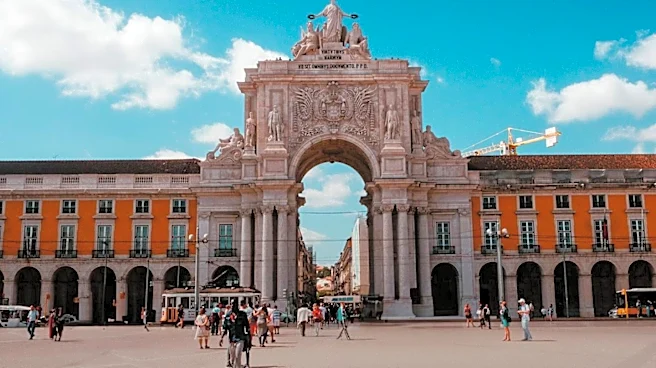







What's Happening?
Lisbon, Portugal, has secured the third position in terms of bookings among French tourists for 2026, according to a study by the travel group eDreams ODIGEO. The findings, published by Portugal’s national tourism agency, Turismo de Portugal, on November
16, 2026, analyzed search queries and bookings made by French travelers between January 1 and October 31, 2026. Marrakech, Morocco, and Barcelona, Spain, ranked higher than Lisbon. Another Portuguese city, Porto, also made it into the top ten most popular destinations for French tourists. The study further revealed that approximately 29% of French travelers opted for vacations lasting between seven and 13 days, while 27% preferred shorter trips of three or four days. An additional 14% chose trips lasting five or six days. Social media significantly influenced vacation choices, with about 39% of participants reporting discovering attractive destinations through online content.
Why It's Important?
The strong showing of Lisbon and Porto in the French tourism market highlights the growing appeal of Portuguese cities as prime European travel destinations. This trend is significant for Portugal's tourism sector, contributing to its economy through increased visitor spending on accommodation, dining, and cultural activities. The popularity is attributed to the cities' rich historical sites, diverse cuisine, and opportunities for cultural immersion. For the U.S. tourism industry, this data offers insights into European travel preferences, potentially influencing marketing strategies for American destinations seeking to attract European visitors. Understanding the factors driving French tourist choices, such as the influence of social media and preferred trip durations, can inform broader tourism development and promotional efforts, even if indirectly, by showcasing successful models of destination marketing and visitor engagement.
What's Next?
The continued popularity of Lisbon and Porto among French tourists suggests that these cities will likely remain key destinations in the European travel market. Portuguese tourism authorities and businesses may leverage this data to further enhance their offerings and marketing campaigns, potentially targeting other European and international markets with similar preferences. The influence of social media on travel decisions indicates a continued need for destinations to maintain a strong online presence and engage with travelers through digital platforms. Future studies might explore how these trends evolve, especially concerning the impact of new travel technologies or changing economic conditions on tourist behavior. The success of these Portuguese cities could also inspire other European destinations to analyze their own appeal and adapt their tourism strategies accordingly.
Beyond the Headlines
The sustained appeal of Lisbon and Porto extends beyond mere tourism statistics, reflecting a broader cultural and economic shift. These cities offer a blend of historical charm and modern vibrancy, attracting visitors seeking authentic experiences. The emphasis on historical sites, cuisine, and culture points to a growing demand for experiential travel over traditional leisure. This trend has implications for urban development, as cities strive to balance tourism growth with the preservation of local character and infrastructure. The significant role of social media in influencing travel decisions underscores the pervasive impact of digital platforms on consumer behavior, highlighting the importance of visual storytelling and online engagement in the modern travel industry. This also raises questions about the authenticity of travel experiences curated through social media and the potential for over-tourism in popular destinations.