





What's Happening?
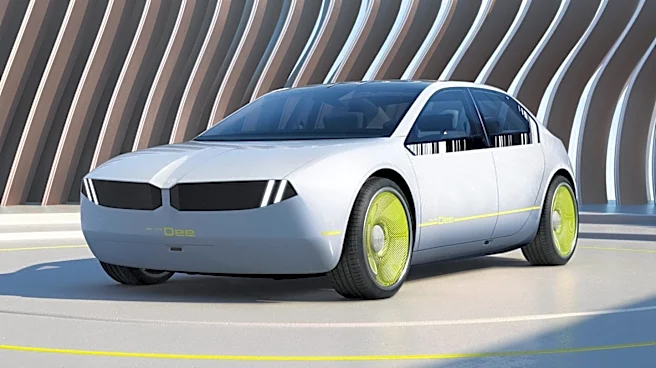
Clemson University has unveiled the Deep Orange 17, a solar-powered car that generates more electricity than it consumes for driving. This prototype, developed by master’s students in collaboration with BMW engineers, features over 1,700 solar cells and
weighs 550 kilograms. It can achieve a range of up to 70 kilometers per day solely on solar energy, which is sufficient for the average commuter. The car's design allows it to produce excess energy after 20 kilometers of driving, potentially powering an additional 50 kilometers. This project highlights the potential of solar technology in reducing reliance on traditional charging infrastructure.
Why It's Important?
The development of the Deep Orange 17 represents a significant advancement in solar vehicle technology, showcasing the potential for solar energy to supplement or even replace traditional charging methods. This innovation could lead to reduced demand on electrical grids and lower operational costs for electric vehicles. As solar technology becomes more efficient and cost-effective, it could play a crucial role in the transition to sustainable transportation. The project also demonstrates the potential for academic and industry collaboration to drive technological advancements.
What's Next?
While the Deep Orange 17 is a research vehicle, its success could inspire further development and commercialization of solar-powered vehicles. The automotive industry may explore integrating solar panels into electric vehicles to enhance range and reduce grid dependency. However, widespread adoption will depend on overcoming challenges such as efficiency, cost, and consumer acceptance. Future research may focus on improving solar cell efficiency and integrating solar technology into various vehicle types, including commercial trucks and buses.
Beyond the Headlines
The use of solar technology in vehicles raises questions about the future of energy independence and sustainability in transportation. It challenges the current infrastructure and business models of the automotive industry, potentially leading to a shift towards more decentralized and renewable energy sources. Additionally, the environmental benefits of reducing fossil fuel dependency could contribute to global efforts to combat climate change. However, the feasibility of solar-powered vehicles in different climates and regions remains a topic for further exploration.