






What's Happening?
STMicroelectronics has introduced the STM32G5 series of mixed-signal microcontrollers (MCUs), designed for digital power and advanced motor control applications. This new series features a 12-channel high-resolution timer with 111-picosecond resolution,
a new position encoder, an integrated Programmable Logic Array with 16 logic elements, and an analog-to-digital converter supporting 5 megasamples per second. The STM32G5 is the first mixed-signal MCU series from ST to incorporate a Cortex-M33 processor, available in single- or dual-core configurations, running at 280 MHz. It achieves 1136 points in CoreMark, a significant improvement over the STM32G4's Cortex-M4. The series also includes Arm TrustZone for code and asset isolation, up to 512 KB of flash memory with optional dual-bank configuration for live firmware upgrades, and 96 KB of data flash. Target applications include data center power systems, motor control systems for robotics, photovoltaic inverters, EV chargers, and battery management systems.
Why It's Important?
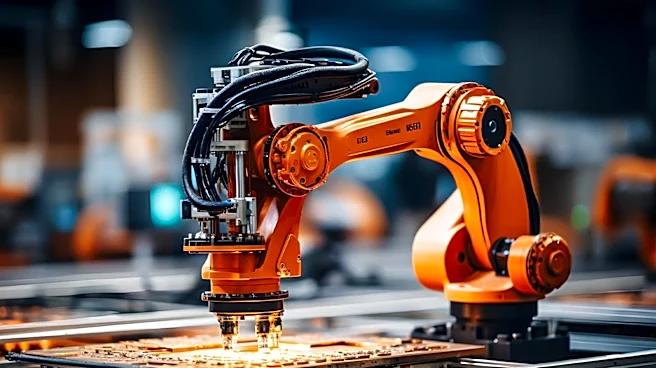
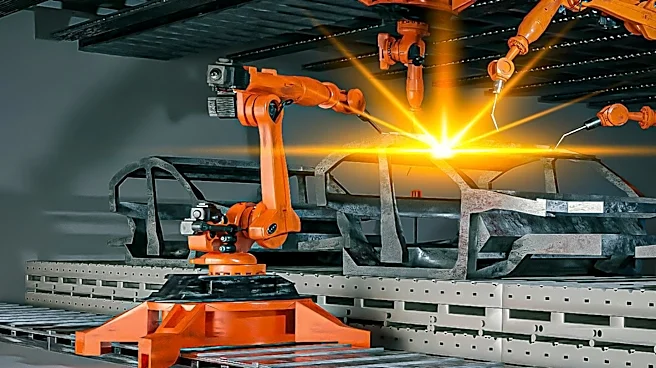
The launch of the STM32G5 MCUs is critical for U.S. industries relying on advanced digital power and motor control, such as data centers, electric vehicle manufacturing, and robotics. The enhanced capabilities, particularly the higher resolution timers and faster analog-to-digital conversion, enable more precise and efficient control in these applications. This can lead to improved energy efficiency in data centers, longer battery life and faster charging for EVs, and more sophisticated control in robotic systems, all of which are key areas of innovation and investment in the U.S. The integration of the Cortex-M33 processor with Arm TrustZone also addresses the growing need for secure embedded systems, protecting critical infrastructure and intellectual property. For U.S. manufacturers, these MCUs offer the potential to develop more competitive and high-performance products, driving technological advancement and economic growth in critical sectors.
What's Next?
The STM32G5 series is now available, with five different dies launched initially, and dual-core STM32G5D versions planned for production in 2027. The series is supported by STM32CubeMX2, which provides live code preview and configuration features, along with HAL2 support, facilitating development for engineers. The availability of application-specific firmware will further aid in the development of digital power and motor control solutions. As these MCUs are adopted, U.S. companies in the data center, EV, and robotics sectors will likely begin integrating them into their next-generation products. The performance and security features of the STM32G5 could set new benchmarks for embedded control systems, influencing future design choices and technological roadmaps across these industries. The ongoing development of dual-core versions suggests a future trend towards even more powerful and secure embedded processing capabilities.
Beyond the Headlines
The introduction of the STM32G5 MCUs signifies a broader trend in semiconductor design towards highly integrated, secure, and high-performance solutions for specialized applications. The emphasis on digital power and motor control reflects the increasing demand for precision and efficiency in energy management and automation across various industries. The inclusion of Arm TrustZone highlights the growing importance of hardware-level security in embedded systems, a critical concern given the rise of cyber threats to industrial and automotive infrastructure. This development could also accelerate the adoption of advanced control algorithms and artificial intelligence in edge devices, enabling more autonomous and intelligent systems. The continuous evolution of MCUs like the STM32G5 will be a key enabler for the next wave of innovation in smart manufacturing, sustainable energy, and advanced robotics, shaping the technological landscape for years to come.