



What's Happening?
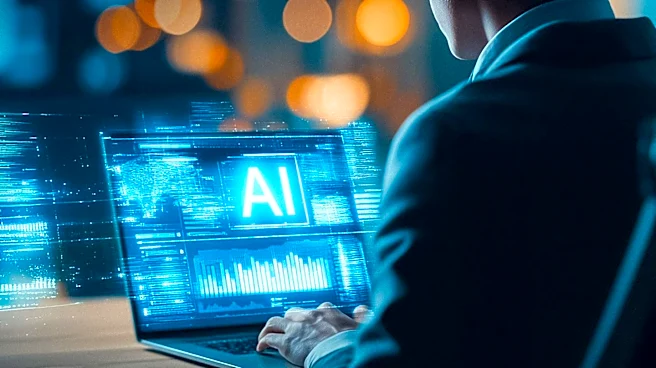
Artificial Intelligence (AI) and Machine Learning (ML) are being integrated into Enterprise Resource Planning (ERP) systems to enhance their capabilities beyond traditional data recording and reporting. This integration allows ERP systems to analyze data,
learn patterns, and suggest actions, effectively transforming them into intelligent business partners. Key applications include predictive analytics for demand forecasting, which helps organizations plan production, manage inventory, and reduce costs by preventing stock shortages and overstocking. AI in ERP also automates repetitive tasks such as data entry, invoice matching, and report generation, using ML to understand patterns and process documents automatically. This automation reduces manual work, saves time, minimizes human errors, and speeds up workflows. Furthermore, AI provides intelligent decision support by converting large ERP data into meaningful recommendations, identifying hidden patterns, trends, and anomalies that humans might miss. This enables managers to make confident, data-driven decisions and helps organizations stay competitive.
Why It's Important?
The integration of AI and ML into ERP systems is crucial for U.S. businesses seeking to improve efficiency, reduce operational costs, and gain a competitive edge. By automating repetitive tasks, companies can reallocate human resources to more strategic and creative endeavors, fostering innovation and productivity. Predictive analytics, powered by AI and ML, allows for more accurate demand forecasting, which is vital for supply chain optimization and inventory management, directly impacting profitability and customer satisfaction. The enhanced decision-making capabilities provided by AI-driven insights enable leaders to respond more effectively to market changes and identify risks and opportunities in real-time. This technological advancement helps U.S. organizations become more agile and resilient in a rapidly evolving global market, ensuring they can meet customer demands efficiently and maintain a strong financial position.
What's Next?
The ongoing evolution of AI and ML in ERP systems is expected to lead to even more sophisticated applications. Future developments will likely focus on further refining predictive models, enhancing the autonomy of automated processes, and expanding the scope of intelligent decision support. Organizations will continue to invest in these technologies to achieve greater operational efficiency and strategic foresight. The continuous learning capabilities of ML will ensure that ERP systems become increasingly accurate and effective over time, adapting to new data and market conditions. This will likely result in a shift towards more proactive and adaptive business strategies, with ERP systems serving as central intelligence hubs that guide organizational growth and resilience. Businesses that embrace these advancements will be better positioned to navigate complex economic landscapes and maintain a competitive advantage.
Beyond the Headlines
The deeper implications of AI and ML in ERP extend to significant shifts in workforce dynamics and ethical considerations. As AI automates more routine tasks, there will be a growing need for employees to upskill and reskill to focus on higher-value, strategic work that requires human creativity and critical thinking. This transformation could lead to a more specialized and intellectually engaged workforce. Ethically, the reliance on AI for decision-making raises questions about algorithmic bias and accountability, necessitating robust frameworks to ensure fairness and transparency in AI-driven recommendations. The enhanced fraud detection and risk management capabilities also highlight the increasing importance of cybersecurity and data privacy in an interconnected business environment. Ultimately, the widespread adoption of AI and ML in ERP systems will not only redefine operational efficiency but also reshape organizational structures, employee roles, and the ethical landscape of business operations.