







What's Happening?
Regular stretching routines are highlighted for their significant health benefits, including reducing muscle soreness and fatigue, improving physical performance, decreasing injury risk, and enhancing blood flow to muscles. For seniors, a gradual and supported
stretching progression is recommended, starting with 20-second holds and building up to 30 seconds, repeated 2 to 3 times per side. This approach focuses on addressing ordinary stiffness rather than sharp pain, emphasizing mild pulls over straining. Active seniors who already engage in regular physical activity may benefit more from dynamic warm-ups that focus on strength, balance, control, and stability before workouts, rather than traditional static stretching. The guidance suggests that a routine works best when it fits into daily life, such as after a walk or morning coffee, to ensure consistency. For beginners, a 3-day plan is often sufficient to build momentum, while active individuals might follow a 5-day plan incorporating brief daily mobility flows and longer sessions for specific problem areas.
Why It's Important?
The emphasis on stretching routines is crucial for public health, particularly for the aging U.S. population. As individuals age, flexibility naturally decreases, impacting daily activities like reaching for a seatbelt or tying shoes. By promoting regular, appropriate stretching, this guidance can help seniors maintain independence and quality of life, reducing the burden of age-related mobility issues. Improved flexibility can also make other forms of exercise safer and more effective, encouraging continued physical activity which is vital for overall health. The distinction between static stretching and dynamic warm-ups for different activity levels ensures that recommendations are tailored, maximizing benefits and minimizing risks. This approach can lead to fewer injuries, better functional movement, and a more active lifestyle for older adults, potentially reducing healthcare costs associated with falls and mobility impairments.
What's Next?
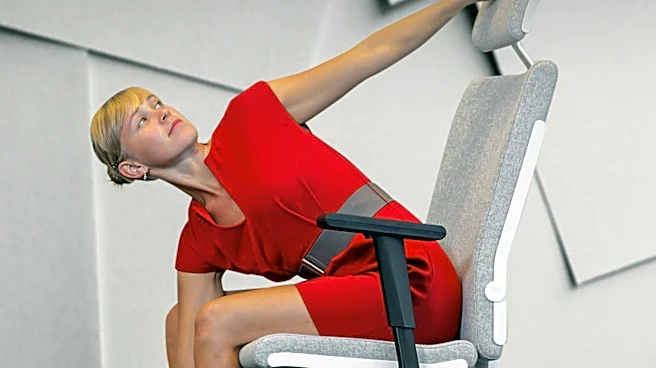
Individuals, especially seniors, are encouraged to integrate stretching into their daily or weekly routines. For beginners, a structured four-week progression is suggested, starting with chair-assisted stretches and gradually moving to standing and floor-supported options, if safe. The plan advises focusing on key areas like hamstrings, hips, neck, and shoulders. It also recommends modifications for individuals with conditions like arthritis or osteoporosis, emphasizing caution and avoiding aggressive movements. The guidance stresses the importance of warming up before stretching to prepare the body and make the process more effective. Furthermore, it highlights the need to differentiate between stiffness, weakness, and pain, suggesting that stretching is most effective for stiffness, while weakness may require strengthening exercises, and persistent pain warrants professional evaluation.
Beyond the Headlines
Beyond the immediate physical benefits, the promotion of tailored stretching routines touches upon broader societal implications regarding active aging and preventive healthcare. By empowering individuals to proactively manage their flexibility, there's a potential shift towards a more preventative healthcare model, reducing reliance on reactive treatments for age-related mobility decline. The advice to consult a therapist for persistent pain or sudden loss of motion underscores the importance of professional guidance in personalized health management, moving beyond generic advice. This holistic view recognizes that flexibility is interconnected with strength and balance, advocating for comprehensive physical activity rather than isolated stretching. The psychological benefit of feeling more capable and less restricted in daily movements can also contribute to improved mental well-being and a greater sense of autonomy among older adults.