





What's Happening?
Ugandan President Yoweri Museveni has revealed that his government has restructured its fuel import strategy after discovering that petroleum products were being sourced through middlemen in Kenya. According to Museveni, a Kenyan senator initially alerted
him to this arrangement. The President stated that he was previously unaware of the involvement of intermediaries in Uganda's fuel procurement. This revelation led to a review of the arrangement, which subsequently showed significant differences in fuel premiums. For instance, the premium paid on diesel decreased from $118 to $83 per metric tonne, petrol dropped from $97.50 to $61.50 per metric tonne, and aviation fuel saw a reduction from $114.25 to $79.25 per metric tonne. These figures reinforced Museveni's decision to end the previous system. The Uganda National Oil Company (UNOC) has since taken on a greater role in directly importing petroleum products from bulk suppliers, though Kenya continues to serve as a crucial transit route for fuel entering Uganda.
Why It's Important?
This shift in Uganda's fuel import strategy holds significant economic implications for the country and potentially for regional trade dynamics. By cutting out middlemen, Uganda has achieved substantial savings on fuel premiums, directly impacting the cost of essential commodities and transportation within the nation. This move aims to enhance Uganda's energy security and reduce its vulnerability to price fluctuations and supply chain inefficiencies caused by intermediaries. For the U.S., while not directly involved, such developments in East African economies can influence regional stability and investment opportunities. A more stable and cost-effective energy supply in Uganda could foster economic growth, potentially creating a more attractive environment for foreign direct investment, including from U.S. companies. Conversely, the disruption of previous arrangements could affect businesses that benefited from the intermediary system, leading to a redistribution of economic benefits within the region's energy sector. The increased role of UNOC also signifies a broader trend of national oil companies asserting greater control over their countries' energy resources.
What's Next?
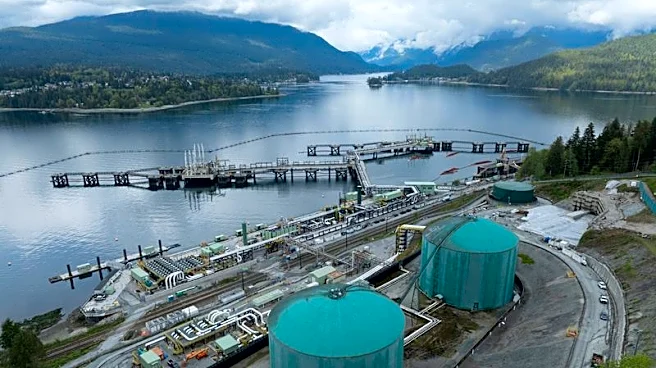
Following the restructuring, Uganda is set to further solidify its energy independence and supply chain efficiency. The Uganda National Oil Company (UNOC) will continue to play a central role in direct petroleum imports. In May 2024, Kenya and Uganda signed a tripartite agreement, which will allow UNOC to import refined petroleum products directly from producer countries and utilize Kenya's infrastructure for transit. Additionally, construction has begun on the Kampala Storage Terminal in Mpigi District, a 320-million-liter petroleum products storage facility. This $250 million project, implemented by UNOC, is expected to more than double Uganda's current petroleum storage capacity, which stands at 160 million liters. The detailed design work for the terminal is anticipated to be completed by March 2027, with commissioning scheduled for around September 2028. This expansion aims to create strategic fuel reserves and improve the reliability of supplies for both domestic and regional markets, addressing the current insufficiency in storage capacity.
Beyond the Headlines
The decision by Uganda to overhaul its fuel import system, prompted by intelligence from a Kenyan senator, highlights deeper issues of transparency, governance, and regional economic cooperation. The involvement of middlemen, as revealed by President Museveni, suggests potential inefficiencies or even corruption within previous procurement processes, underscoring the importance of robust oversight in international trade agreements. This move could set a precedent for other African nations to scrutinize their supply chains and seek more direct, cost-effective sourcing methods, potentially reshaping regional trade relationships. The emphasis on direct imports through UNOC and the significant investment in domestic storage infrastructure reflect a strategic pivot towards greater national control over critical resources. This could lead to enhanced economic sovereignty but also places a greater burden of responsibility on national entities to manage complex international logistics and market dynamics. The unnamed Kenyan senator's role also points to the informal networks and cross-border intelligence that can influence high-level policy decisions, revealing a less visible layer of regional political and economic interaction.