



What's Happening?
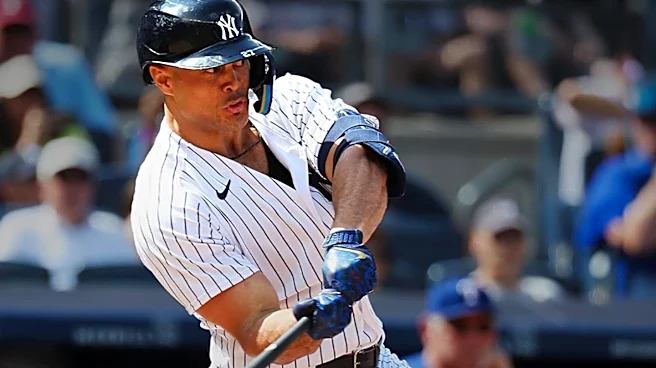
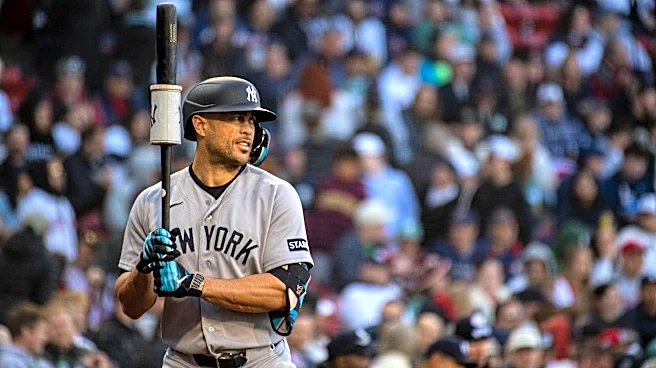
Hal Steinbrenner, owner of the New York Yankees, has a history of absorbing significant financial commitments to facilitate player departures, a strategy that could apply to Giancarlo Stanton. Stanton is currently owed $25 million in 2027, with a club
option for 2028 that includes a $10 million buyout. Since joining the Yankees in 2018, Stanton has missed nearly as many games (694) as he has played (764), and his 2026 season is likely over due to a left calf strain suffered during a rehab assignment for a right calf injury. This recurring injury pattern and the substantial remaining contract suggest that Steinbrenner might be willing to release Stanton, allowing him to pursue his goal of 500 career home runs with another team. A recent poll indicated that only 11% of respondents favored keeping Stanton, with most preferring his release or retirement.
Why It's Important?
This situation highlights the complex financial and strategic decisions faced by major league baseball teams, particularly those with high payrolls like the Yankees. Steinbrenner's willingness to absorb large contracts to move on from underperforming or injury-prone players demonstrates a pragmatic approach to roster management, prioritizing future flexibility and on-field performance over strict adherence to existing financial obligations. For the Yankees, releasing Stanton would free up a designated hitter (DH) spot, potentially creating opportunities for younger players like Ben Rice or Luis García Jr., or allowing them to pursue impact bats in the free-agent or trade markets. This move could also protect star player Aaron Judge from the physical demands of playing right field, as Stanton's DH role has been a factor in Judge's positioning. The decision reflects a broader trend in professional sports where long-term, high-value contracts can become liabilities, prompting teams to make costly but strategically beneficial separations.
What's Next?
The immediate future for Giancarlo Stanton involves continued rehabilitation, though his return to play this season is highly unlikely. The Yankees will need to decide whether to keep Stanton for the 2027 season or absorb his remaining salary to release him. If released, Stanton would become a free agent, able to sign with any of the other 29 MLB teams to continue his pursuit of 500 home runs. For the Yankees, this decision will directly influence their offseason strategy, as a vacant DH spot would open up possibilities for acquiring new talent. Potential replacements could come from within their farm system or through aggressive moves in the trade and free-agent markets, with names like Shohei Ohtani (a long shot), Randy Arozarena, Brandon Lowe, Ian Happ, or Seiya Suzuki being considered as free-agent targets, and Yordan Alvarez or Rafael Devers as potential trade options.
Beyond the Headlines
The potential departure of Giancarlo Stanton from the Yankees, despite his significant contract, underscores the evolving nature of player value and team construction in modern baseball. It raises questions about the long-term viability of mega-contracts for aging players, especially those with extensive injury histories. Beyond the financial implications, the situation also touches on the human element of professional sports, as Stanton's desire to reach 500 home runs and his perceived dedication to the team are contrasted with fan frustration over his availability. This scenario reflects a broader challenge for teams: balancing loyalty and past contributions with the need for consistent performance and future competitiveness. The willingness of an owner like Hal Steinbrenner to 'eat' a substantial contract could set a precedent for other high-spending teams, influencing how player contracts are structured and managed across the league.