







What's Happening?
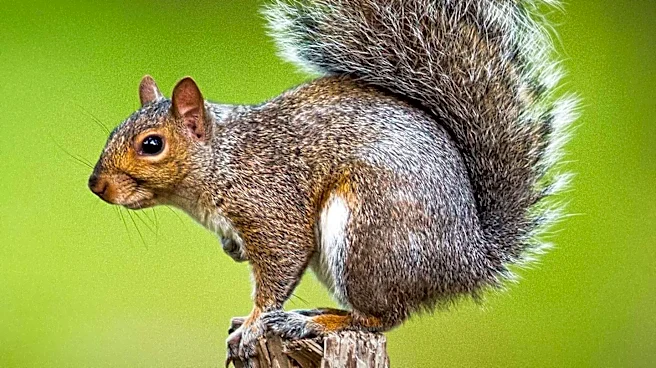
Residents in Iowa have been observing squirrels with unusual white tails, sparking curiosity and intrigue. These squirrels, while having normal bodies, display a striking genetic trait that results in their white tails. Jim Coffey, a forest wildlife biologist
with the Iowa Department of Natural Resources, explains that this phenomenon is due to a recessive genetic trait. The white-tailed squirrels are not a separate species but are regular squirrels exhibiting this rare genetic expression. The trait is more visible in urban areas where the squirrels face fewer predators, allowing the genetic trait to persist and spread.
Why It's Important?
The appearance of white-tailed squirrels in Iowa highlights the role of genetics in wildlife diversity and adaptation. This phenomenon provides an opportunity for scientists and the public to engage with and learn about genetic variations in wildlife. The increased visibility of these squirrels in urban areas also underscores the impact of human environments on wildlife survival and adaptation. Understanding these genetic traits can contribute to broader ecological studies and conservation efforts, as well as foster public interest in local wildlife and biodiversity.
What's Next?
As interest in these white-tailed squirrels grows, there may be further studies conducted to understand the genetic mechanisms behind this trait and its implications for squirrel populations. Public engagement and educational initiatives could be developed to raise awareness about genetic diversity in wildlife. Additionally, conservationists might explore how urban environments can be managed to support diverse wildlife populations, ensuring that unique genetic traits like those seen in the white-tailed squirrels are preserved.