






What's Happening?
Washington Commanders quarterback Jayden Daniels has publicly accepted full responsibility for the team's clock-management error during the final moments of their overtime game against the New York Giants, which resulted in a tie. The incident occurred
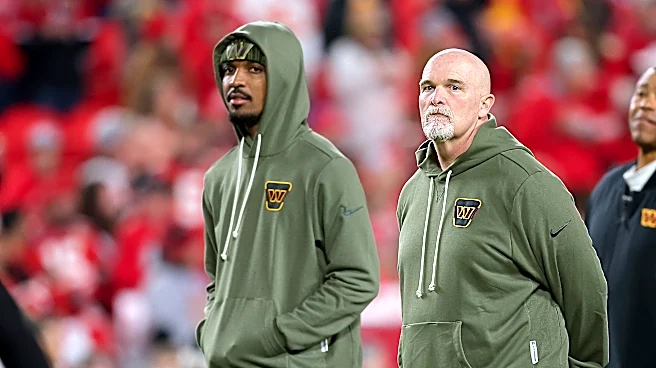
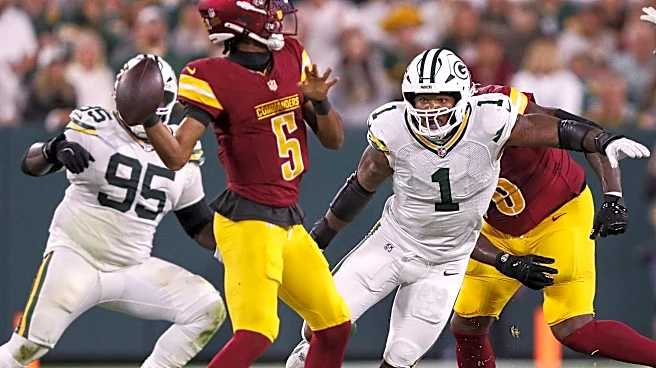
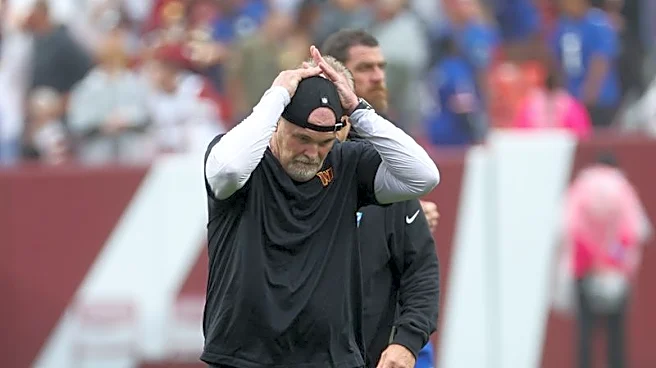
after the Commanders recovered a fumble in overtime, giving them an opportunity to win. Daniels led the team into field goal range, but with no timeouts remaining and 12 seconds on the clock, he was sacked instead of spiking the ball or throwing it out of bounds to stop the clock. This sequence led to time expiring before another play could be run. Daniels stated, 'Ultimately, it's on me at the end of the day,' acknowledging his failure to manage the game effectively and meet the standards he holds for himself and the organization. He also addressed his teammates, assuring them that such a mistake 'it'll never happen again.' Coach Dan Quinn has taken responsibility for the situation, indicating internal discussions and corrections are underway, while also shifting focus to the upcoming game against the 49ers.
Why It's Important?
This incident highlights critical issues in game management and player accountability within professional sports, particularly in high-pressure situations. For the Washington Commanders, a tie game due to a preventable error can have significant implications for their season's trajectory, especially in a competitive division. The public acceptance of blame by a key player like Jayden Daniels, while commendable for leadership, also underscores the direct impact of individual performance on team outcomes and coaching staff perception. The criticism from figures like Green Bay Packers linebacker Micah Parsons, suggesting Daniels' mistake could jeopardize Coach Quinn's job, illustrates the intense scrutiny and high stakes involved in NFL coaching positions. This event also brings into focus the importance of clear communication and situational awareness among players and coaches during critical game moments, as a lapse can negate strong defensive efforts and offensive drives, affecting team morale and fan confidence.
What's Next?
Following the clock-management gaffe, the Washington Commanders are preparing for their next game against the San Francisco 49ers. Coach Dan Quinn has indicated that he will implement adjustments to the team's weekly preparation and in-game processes to prevent similar errors. Jayden Daniels has expressed his commitment to learning from the mistake and moving forward, with support from teammates like backup quarterback Marcus Mariota. The team's performance in upcoming games will be crucial in demonstrating their ability to overcome this setback and improve their situational awareness. The incident has also sparked discussions about Coach Quinn's job security, though he has stated he spoke with owner Josh Harris and continues to take responsibility. The focus will be on how the team, particularly Daniels, responds to the pressure and implements the necessary changes to avoid future critical errors.
Beyond the Headlines
The incident transcends a simple football mistake, touching upon broader themes of leadership, resilience, and the psychological pressures inherent in professional sports. Jayden Daniels' public apology and acceptance of blame, while standard in some respects, also reflects a growing trend of athletes taking direct ownership of their performance, rather than deflecting to coaching or external factors. This level of accountability can foster trust within a team and with the fanbase, but it also places immense psychological burden on individual players. The immediate and widespread criticism, including from other professional athletes, underscores the unforgiving nature of public scrutiny in sports. Furthermore, the event highlights the complex interplay between coaching strategy, player execution, and the unpredictable dynamics of live competition, where a single misstep can alter outcomes and careers. It serves as a stark reminder that even at the highest levels of sport, fundamental errors in judgment can have profound consequences.