




What's Happening?
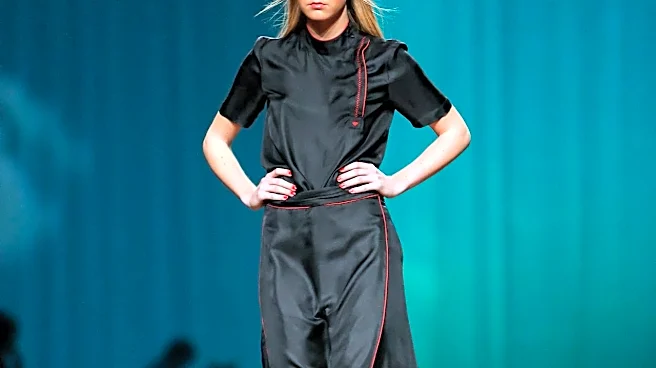
The rugby shirt is experiencing a significant comeback in U.S. fashion, becoming one of the most popular items. This resurgence is evident across various segments of the fashion industry, from high-end runway shows by brands like Gucci and Zankov at Milan
and New York Fashion Week, to celebrity endorsements from figures such as Gigi Hadid and Rihanna. These celebrities have been photographed wearing classic rugby shirts, leading to increased consumer interest and the creation of gift guides highlighting the trend. The popularity extends to preppy legacy brands like Brooks Brothers and J. Crew, which are also seeing a revival in sales. Data from LTK indicates a substantial increase in consumer engagement, with searches for 'rugby shirt' rising by 750% and clicks on specific items, such as American Eagle's striped rugby shirt, increasing by 142% over the last month. This trend is attributed to the rugby shirt's recognizable yet fresh aesthetic, making it appealing to a broad consumer base and versatile for retailers across different price points.
Why It's Important?
The resurgence of the rugby shirt signifies a broader shift in U.S. fashion towards preppy staples and familiar silhouettes, impacting both established and emerging brands. For legacy brands like Brooks Brothers and J. Crew, this trend offers an opportunity for renewed relevance and increased revenue, as consumers gravitate towards classic designs. Michael Bastian, creative director at Brooks Brothers, notes that the rugby shirt serves as an entry point for new customers, particularly men, who then tend to remain loyal to the brand. The trend also highlights a strategic approach by retailers to introduce 'newness' without requiring consumers to take significant fashion risks, which is crucial in a market where consumers are more selective with discretionary spending. The data from LTK underscores the power of organic consumer interest and celebrity influence in driving fashion trends, demonstrating how these factors can rapidly elevate a specific item's desirability and market presence. This shift also suggests a consumer preference for casual items with historical visual interest, moving away from the athleisure trend.
What's Next?
The rugby shirt's continued prominence is expected to influence upcoming fashion collections and retail strategies. Brands will likely continue to incorporate the rugby shirt silhouette, experimenting with different stripes, colors, fabrications, and fits to maintain its appeal. The trend's broad appeal across gender lines, with women increasingly purchasing men's rugby shirts, may lead brands to adjust their sizing and marketing to cater to this demand. The success of the rugby shirt could also pave the way for other preppy staples, such as Oxford shirts, navy blazers, and Harrington jackets, to gain further traction in the market. Retailers will likely monitor consumer search and click data closely to identify and capitalize on similar emerging trends, focusing on items that offer a balance of familiarity and freshness. The sustained interest in classic, versatile pieces suggests a potential long-term shift in consumer preferences towards more enduring and less fleeting fashion items.
Beyond the Headlines
The return of the rugby shirt reflects a deeper cultural inclination towards comfort, nostalgia, and understated style in U.S. society. In an era of rapid trend cycles, the rugby shirt offers a sense of stability and timelessness, resonating with consumers seeking reliable fashion choices. This trend also subtly challenges traditional gender norms in fashion, as evidenced by women adopting men's rugby shirts, indicating a growing fluidity in clothing choices. The emphasis on 'recognizable enough' yet 'fresh enough' designs points to a consumer desire for authenticity and heritage, combined with a modern twist. Furthermore, the shift away from athleisure towards items with 'historical visual interest' suggests a broader societal move towards more structured yet comfortable attire, potentially influenced by evolving work-from-home dynamics and a desire for more polished casual wear. This trend could also signal a renewed appreciation for quality and durability over fast fashion, as consumers invest in classic pieces that offer longevity and versatility.