



What's Happening?
Washington D.C. is offering a walking tour focused on the Harlem Renaissance era in the U Street neighborhood. This tour delves into the period when U Street, often referred to as 'Black Broadway,' was a vibrant hub for jazz music and a significant center
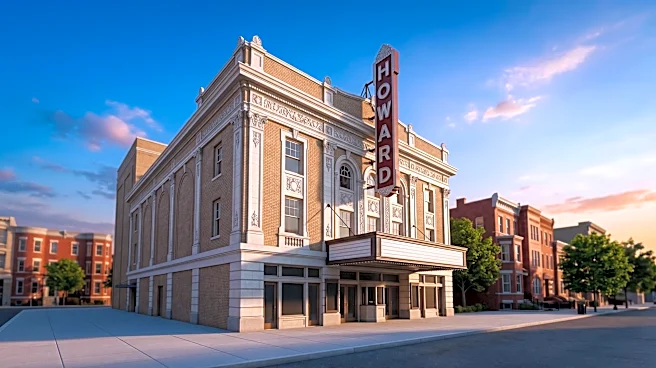
for Black intellectualism. The route begins at the historic Howard Theater, located at 620 T Street NW, and concludes at the intersection of S and 15th Street NW. Participants will explore the venues where renowned jazz musicians performed and where influential writers and thinkers, such as Langston Hughes, Zora Neale Hurston, and Alain Locke, congregated. The tour also includes a stop at Ben's Chili Bowl, a famous local establishment, for a break and optional refreshments, providing a comprehensive experience of the neighborhood's rich cultural history.
Why It's Important?
This walking tour is important as it highlights a pivotal period in American cultural history, specifically the Harlem Renaissance's influence beyond New York City. By focusing on Washington D.C.'s U Street, it educates participants about the significant contributions of African American artists, musicians, and intellectuals who shaped the nation's cultural landscape. The tour helps preserve and promote the legacy of 'Black Broadway,' ensuring that the stories of this vibrant era are not forgotten. It offers a unique opportunity for both residents and tourists to connect with the historical roots of jazz and Black intellectual movements, fostering a deeper understanding of the social and cultural dynamics of the early 20th century. This type of cultural tourism also supports local businesses and historical preservation efforts in the U Street corridor.
What's Next?
The Harlem Renaissance in D.C. Walking Tour is an ongoing cultural offering, providing regular opportunities for the public to engage with this significant historical period. Continued participation in such tours helps sustain interest in the preservation of historic sites along the U Street corridor and encourages further research and educational initiatives related to the Harlem Renaissance. Local historical societies and cultural organizations may continue to develop similar programs or expand existing ones to cover other aspects of D.C.'s rich African American history. The success of these tours could also inspire other cities with similar historical significance to develop their own immersive cultural experiences, further enriching the national understanding of diverse American histories.
Beyond the Headlines
Beyond its immediate educational value, the Harlem Renaissance walking tour in D.C. serves as a powerful reminder of the resilience and creativity of African American communities in the face of systemic challenges. It underscores the role of cultural hubs like U Street in fostering identity, community, and artistic expression during a time of racial segregation. The tour implicitly touches upon themes of urban development, gentrification, and the ongoing efforts to maintain the historical integrity of neighborhoods while adapting to modern changes. It also highlights the enduring impact of figures like Langston Hughes and Zora Neale Hurston, whose works continue to resonate today. This cultural exploration contributes to a broader dialogue about heritage, representation, and the importance of recognizing diverse narratives in the American story.