




What's Happening?
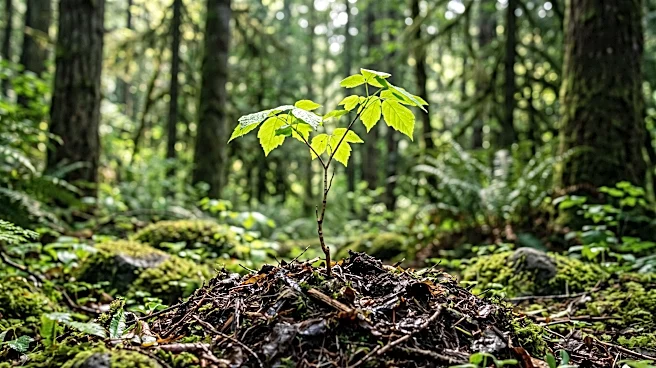
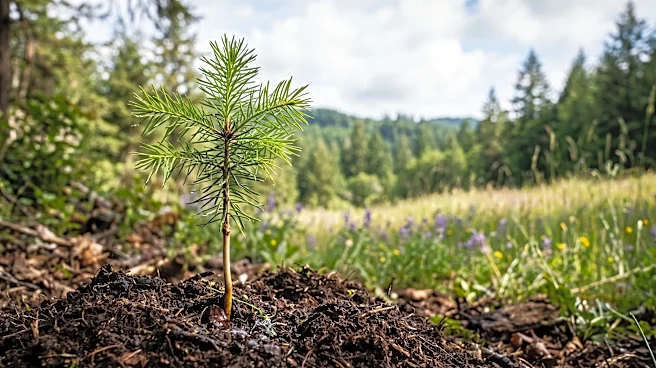
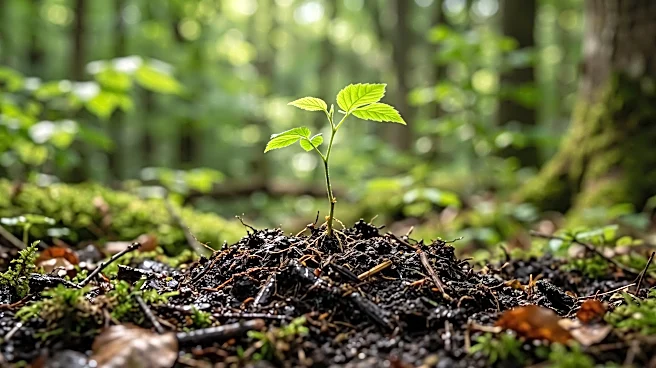
Kim Novak, the 93-year-old actress renowned for her role in Alfred Hitchcock's 'Vertigo,' has publicly shared her end-of-life wish to undergo natural organic reduction, a process that transforms human remains into compost. She hopes that trees will be
grown from her composted remains, viewing this as a continuation of her connection with nature rather than something to fear. Novak articulated this desire in an interview with PETA, an organization known for its animal protection campaigns. She expressed a sense of peace at the prospect of contributing to the growth of a tree, stating, 'Now I think that when I leave, it's okay, because I will become part of that beautiful tree and I will continue to grow.' This wish reflects her long-standing affinity for nature, which deepened after she retired from Hollywood in 1966 to pursue a quieter life focused on painting, animals, and the natural world.
Why It's Important?
Novak's public statement highlights a growing trend in end-of-life choices that prioritize environmental sustainability and a return to nature. Natural organic reduction, also known as human composting, offers an alternative to traditional burial and cremation, which have significant environmental impacts. Traditional burials can involve embalming chemicals and non-biodegradable caskets, while cremation is energy-intensive and releases carbon emissions. By choosing human composting, Novak is drawing attention to a method that is more eco-friendly, aligning with broader societal concerns about climate change and sustainable practices. Her celebrity status could significantly raise awareness and acceptance of this alternative, potentially influencing more individuals to consider similar options. This shift could lead to increased demand for natural organic reduction services, prompting changes in funeral industry practices and potentially impacting land use for cemeteries, as composted remains require less space and can enrich soil.
What's Next?
The availability and legality of natural organic reduction vary by jurisdiction within the U.S. For Novak's wish to be fulfilled, it would depend on the laws of the state where she resides or where the process is intended to take place. Currently, several U.S. states have legalized human composting, including Washington, Colorado, Oregon, Vermont, and California, with other states considering similar legislation. Her public endorsement could accelerate the legislative process in states where it is not yet legal, as public figures often bring mainstream attention to niche practices. Funeral homes and related services may see an increase in inquiries and demand for natural organic reduction, potentially leading to the expansion of facilities and services that offer this option. Furthermore, her choice might inspire discussions within families and communities about alternative end-of-life planning, fostering a greater understanding and acceptance of environmentally conscious death care.
Beyond the Headlines
Kim Novak's decision to embrace natural organic reduction transcends a mere personal preference; it reflects a profound philosophical shift towards viewing death as an integral part of the natural cycle. Her desire to 'become part of that beautiful tree' speaks to a spiritual connection with the environment and a rejection of the finality often associated with death in Western cultures. This perspective challenges conventional notions of remembrance and legacy, suggesting that a meaningful continuation can be found in contributing to ecological renewal. Her retreat from Hollywood in 1966 to live a life closer to nature underscores a consistent personal philosophy that now extends to her post-mortem wishes. This choice could also spark broader conversations about the commodification of death and the funeral industry, encouraging a re-evaluation of practices that are often costly and environmentally burdensome. It highlights a growing desire for authenticity and ecological responsibility even in death, aligning with a larger cultural movement towards sustainable living.