



What's Happening?
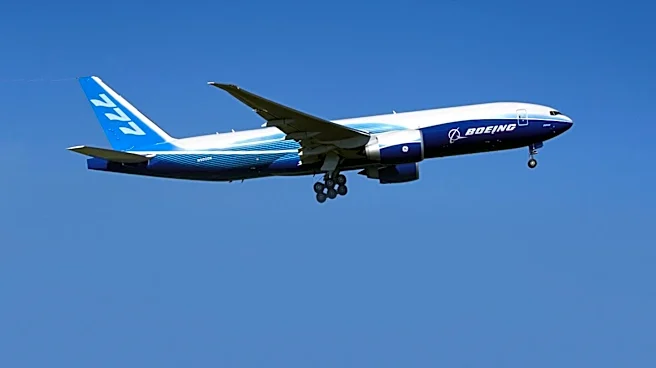
Boeing has reported its highest quarterly aircraft deliveries since 2018, with 171 commercial airplanes delivered in Q2. The company's revenue increased by 8% to $24.6 billion, driven by higher commercial airplane deliveries and increased defense volume.
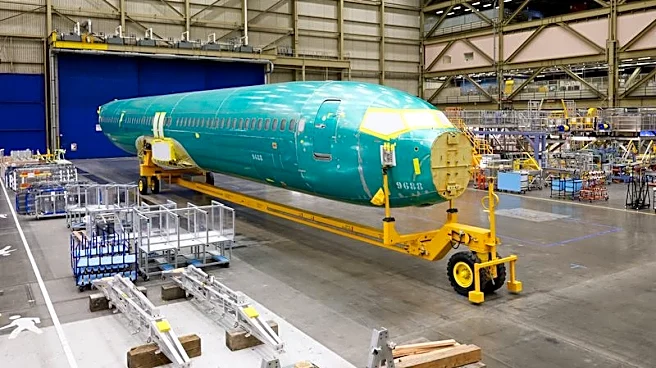
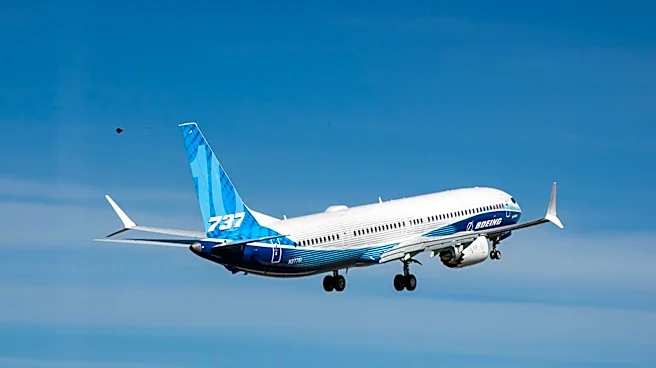
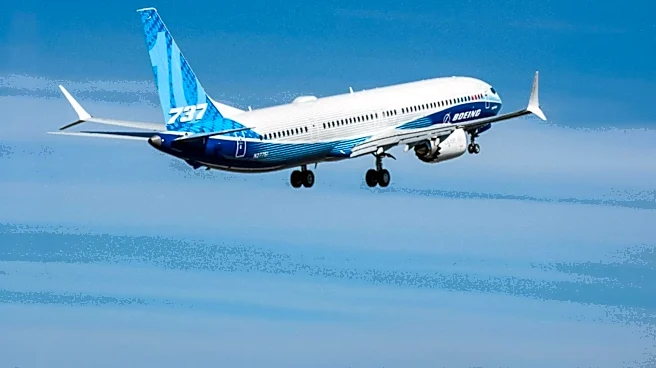
Despite a core loss per share, Boeing generated $631 million in positive free cash flow. The company is ramping up production of its 737 models and expects to maintain its delivery timelines for new aircraft variants. Boeing's defense segment also saw a revenue increase, although profitability was impacted by a charge on the VC-25B presidential aircraft program.
Why It's Important?
Boeing's strong performance in Q2 is a positive indicator for the aerospace industry, suggesting a recovery in demand for commercial aircraft. The increase in deliveries and revenue highlights Boeing's ability to navigate supply chain challenges and meet production targets. This performance could boost investor confidence and support Boeing's financial stability. Additionally, the company's focus on safety and quality, as well as its commitment to innovation, positions it well for future growth in both commercial and defense sectors.
What's Next?
Boeing plans to continue increasing production rates for its 737 models and is working on resolving supply chain issues to support higher output levels. The company is also focused on meeting certification requirements for new aircraft variants and maintaining its delivery schedules. As Boeing executes its backlog and improves operational efficiency, it aims to achieve its free cash flow targets and enhance profitability across its business segments.