








What's Happening?
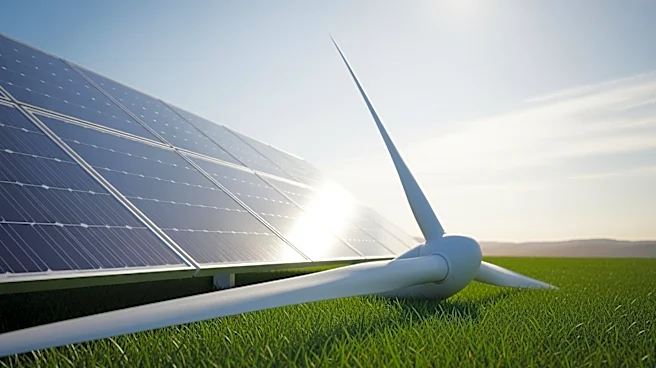
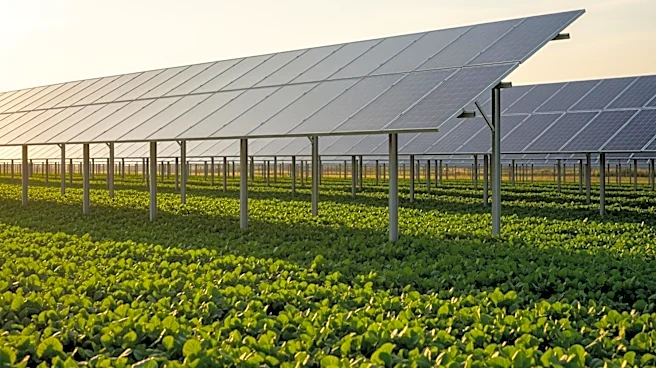
Agrivoltaics, the practice of combining solar energy production with agricultural activities, is gaining traction among environmental advocates as a sustainable solution to meet the growing demands for food and energy. This innovative approach allows
for dual land use, where solar panels provide shade and protection for crops, while the crops help keep the panels cool, enhancing their efficiency. The U.S. Department of Energy projects that solar energy could supply up to 40% of the nation's electricity by 2035, with agrivoltaics playing a significant role. This method not only reduces greenhouse gas emissions but also promotes water conservation and increases agricultural productivity.
Why It's Important?
The adoption of agrivoltaics represents a significant step towards sustainable agriculture and energy production. By integrating solar panels with farming, this approach addresses multiple environmental challenges, including reducing reliance on fossil fuels and mitigating the carbon footprint of agriculture. It also offers economic benefits by increasing farm productivity and providing a renewable energy source. As climate change continues to impact agricultural practices, agrivoltaics offers a resilient solution that can enhance food security and energy independence. The growing interest in this technology reflects a broader shift towards sustainable development and climate resilience.
What's Next?
As interest in agrivoltaics grows, further research and development are expected to optimize the technology and reduce costs. Policymakers and industry leaders may focus on creating incentives and regulatory frameworks to support the adoption of agrivoltaics. Educational initiatives could also be implemented to train farmers and technicians in the installation and maintenance of these systems. Collaboration between agricultural and energy sectors will be crucial to overcoming challenges and maximizing the benefits of agrivoltaics. The expansion of this technology could lead to significant advancements in sustainable agriculture and renewable energy.