





What's Happening?
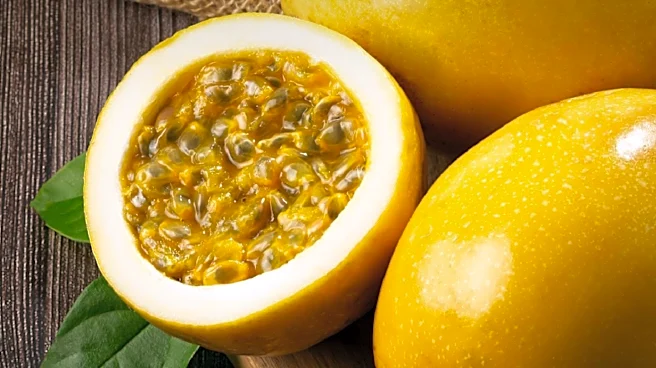
A live yellow passion fruit plant is being offered as a fast-growing climber suitable for gardens and trellises. This plant, which comes in a half-gallon pot, is ready for transplanting and is known for producing bright yellow, edible passion fruits.
The vine can grow to 20 feet or more, requiring a trellis, fence, or arbor for support. It thrives in well-drained soil and requires ample sunlight to ensure robust growth. This plant is presented as an ideal option for gardeners interested in cultivating their own tropical fruit or those seeking an aesthetically pleasing climbing plant that also yields produce.
Why It's Important?
The availability of fast-growing, edible plants like the yellow passion fruit vine is significant for promoting home gardening and sustainable food practices in the U.S. It offers individuals the opportunity to grow tropical fruits that might otherwise be expensive or difficult to source locally, contributing to food independence and reducing reliance on commercial supply chains. For urban and suburban gardeners with limited space, a climbing plant maximizes vertical growing areas, making fresh produce more accessible. Furthermore, integrating edible plants into landscaping can enhance biodiversity and provide a source of fresh, nutritious food, potentially encouraging healthier eating habits within households. The plant's dual benefit of ornamental beauty and fruit production adds value to home gardens, making it an attractive option for a wide range of consumers.
What's Next?
Gardeners who acquire this yellow passion fruit plant will need to prepare a suitable sunny location with well-drained soil and install a sturdy support structure like a trellis or arbor to accommodate its significant growth. Consistent watering and proper care will be essential for the plant to establish and begin producing fruit. As the plant matures, it will require ongoing maintenance, including pruning to manage its size and encourage fruit production. Consumers can anticipate harvesting edible passion fruits, which can be enjoyed fresh or used in various culinary applications. The success of such plants could lead to increased interest in cultivating other tropical or exotic fruits in home gardens across suitable U.S. climates.
Beyond the Headlines
The growing interest in edible landscaping and self-sufficiency in food production reflects a broader cultural shift towards sustainability and healthier lifestyles. The yellow passion fruit plant, with its dual appeal as an ornamental and a food source, embodies this trend. Beyond the immediate benefits of fresh fruit, cultivating such plants can foster a deeper connection to nature and an understanding of food origins. It also highlights the potential for diverse agricultural practices, even on a small scale, to contribute to local food security and environmental well-being. The act of growing one's own food can also provide educational opportunities for families, teaching about plant life cycles, ecological balance, and the rewards of patience and care.