





What's Happening?
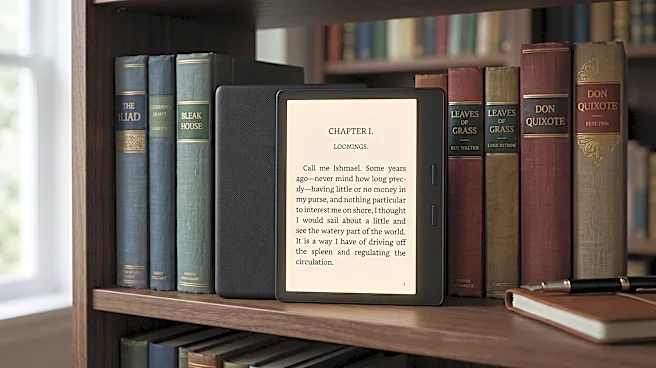
Amazon is discontinuing software support for its 10th-generation Kindle devices, effective December 31. This change impacts the Kindle (2019), Kindle Paperwhite (2018), and Kindle Kids (2019) models. After this date, these devices will no longer receive
security patches or new feature updates. While users should still be able to access the Kindle Store to purchase and download books, the cessation of software support marks a significant shift for owners of these older models. The company's decision follows a pattern of phasing out support for older devices, as seen with Kindles from 2012 and earlier, which previously lost access to the Kindle Store. This move signals that while immediate functionality for buying books remains, it may be a precursor to further limitations in the future.
Why It's Important?
This decision by Amazon is important for consumers who own these specific Kindle models, as it signals the eventual obsolescence of their devices. While the immediate impact on usability is minimal, the lack of future security updates could pose long-term risks, though e-readers are generally less vulnerable to hacks than smartphones. More significantly, it sets a precedent for the lifecycle of Amazon's e-reader products, indicating that even relatively recent models will eventually lose full functionality. This could influence consumer purchasing decisions, encouraging users to upgrade to newer models more frequently. For the broader e-reader market, it highlights the ongoing challenge of balancing device longevity with technological advancements and security maintenance, potentially pushing users towards newer, supported devices or alternative e-reader ecosystems.
What's Next?
Owners of the affected 10th-generation Kindles can continue to use their devices for reading and accessing the Kindle Store for the foreseeable future. However, they should anticipate no further software improvements or security enhancements. The next logical step, based on Amazon's past actions, would be the eventual discontinuation of Kindle Store access for these models, similar to what occurred with Kindles from 2012 and earlier. This would effectively limit these devices to reading already downloaded content. Users may begin to consider upgrading to newer Kindle models or exploring other e-reader brands that offer ongoing software support. Amazon will likely continue to promote its latest e-reader offerings, potentially with trade-in programs, to encourage upgrades among its user base.
Beyond the Headlines
The discontinuation of software support for these Kindle models raises broader questions about product longevity and planned obsolescence in consumer electronics. While companies need to innovate and maintain security, the relatively short support lifespan for devices like e-readers can contribute to electronic waste and consumer frustration. This trend encourages a cycle of continuous upgrades, which has environmental implications due to increased manufacturing and disposal. It also highlights the power of platform providers like Amazon to dictate the usability and lifespan of their hardware through software support. Consumers are increasingly reliant on these digital ecosystems, making decisions about software support critical for both user experience and environmental sustainability.