






What's Happening?
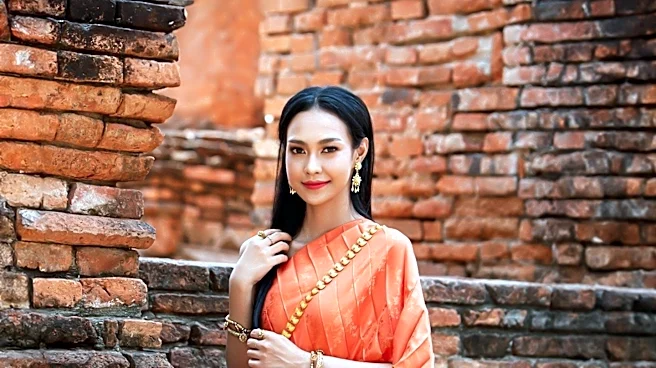
Thailand's Generation Z is actively incorporating traditional cultural elements into their contemporary fashion and daily lives. This trend is evident with the rising popularity of 'malai radklao,' floral hair garlands, which are now being paired with modern
outfits rather than being reserved solely for traditional Thai dress. This cultural revival extends beyond fashion, influencing performance art, with young audiences showing significant interest in traditional Khon masked dance, leading to increased demand for tickets and performances. Social media plays a crucial role in disseminating these trends, turning cultural interest into real-world activities, such as revitalizing Bangkok's flower market through popular photo opportunities with lotus flowers. The integration of traditional items like the 'sabai,' a traditional Thai shoulder cloth, with contemporary clothing like jeans, has also gained traction among young social media users, making traditional attire more accessible and appealing.
Why It's Important?
This movement signifies a dynamic approach to cultural preservation, where young generations are not merely observing but actively participating in and adapting their heritage to fit modern tastes and lifestyles. It demonstrates how social media can act as a powerful catalyst for cultural revival, transforming traditional practices into widespread trends and fostering a sense of pride in national identity among youth. Economically, this trend has tangible benefits, as increased interest in traditional items and performances stimulates local markets, such as flower markets and cultural performance venues. The blending of traditional and contemporary styles also showcases a unique form of cultural expression that could influence global fashion trends and promote cross-cultural appreciation. This active engagement ensures that cultural heritage remains vibrant and relevant, rather than becoming a relic of the past.
What's Next?
The continued influence of social media is likely to further amplify these cultural trends, potentially leading to the integration of more traditional Thai elements into mainstream fashion and lifestyle. We can anticipate a sustained demand for traditional crafts, performances, and cultural experiences, which could encourage artisans and performers to innovate and adapt their offerings to appeal to a younger audience. This could also lead to increased collaborations between traditional artists and modern designers or content creators. The success of these trends may inspire other countries to explore similar approaches to cultural preservation, leveraging digital platforms to engage younger generations with their heritage. Furthermore, the economic benefits observed in local markets could expand, creating new opportunities for cultural tourism and related industries.
Beyond the Headlines
The phenomenon of Gen Z embracing traditional Thai heritage goes beyond mere fashion; it reflects a deeper societal shift towards valuing and reinterpreting cultural roots in a globalized world. This active participation challenges the notion that tradition is static, demonstrating its adaptability and resilience. It also highlights the power of individual expression within a collective cultural framework, where young people are finding ways to personalize and own their heritage. This movement could foster a stronger sense of national identity and community, as shared cultural experiences become a basis for connection. Moreover, it raises questions about the evolving definition of 'authenticity' in cultural practices, as traditions are recontextualized and blended with modern elements, creating new forms of cultural expression that are both rooted in the past and relevant to the present.