




What's Happening?
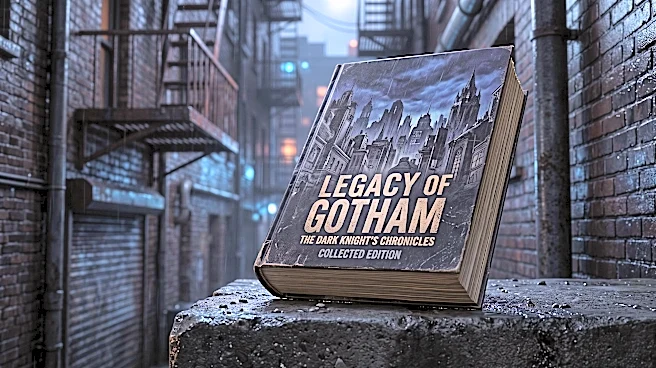
DC Comics has released 'Gangs of Gotham #1,' a new comic book featuring the vigilante Lonnie Machin, also known as Anarky. In this issue, Anarky is captured by the corporate criminal Minotaur and given an ultimatum: work to unite the gangs of Gotham's
East End or face death. This situation complicates matters for Batman, as Anarky inadvertently interferes with an undercover operation already in progress. The story portrays Anarky as a teenage idealist, a return to his original concept, though not necessarily in a sympathetic light. The artwork by Mike Henderson, with colors by Trish Mulvihill and letters by Becca Carey, depicts urban settings and action sequences, though character designs for some figures like Magpie are noted for their lack of variation.
Why It's Important?
The release of 'Gangs of Gotham #1' is significant for fans of DC Comics and the Batman universe, particularly those interested in the evolving landscape of Gotham City's underworld. The comic reintroduces Anarky, a character with a polarizing history, and attempts to redefine his role and motivations. This could influence future storylines within the Batman franchise and potentially attract new readers while challenging the perceptions of long-time fans. The portrayal of Anarky as a 'whinier' and less competent figure, whose successes are often attributed to luck or Batman's secret intervention, represents a notable shift from previous interpretations. This recharacterization could spark discussions among comic enthusiasts about character development and narrative direction in established universes.
What's Next?
The narrative trajectory of 'Gangs of Gotham #1' suggests continued exploration of Anarky's reluctant involvement with Minotaur and the gang unification efforts in Gotham's East End. Readers can anticipate further developments regarding Batman's undercover agent and how Anarky's actions will impact the broader criminal ecosystem of the city. The series will likely delve deeper into the identity of the 'female Cluemaster,' which is presented as a key mystery within the first issue. Future installments will reveal whether Cantwell's portrayal of Anarky as a hapless anti-hero will resonate with the audience or if the character will undergo further evolution as the story progresses.
Beyond the Headlines
The reinterpretation of Anarky in 'Gangs of Gotham #1' touches upon broader themes of idealism, competence, and the nature of heroism within comic book narratives. By presenting Anarky as a less formidable and more bumbling figure, the comic challenges traditional notions of vigilante effectiveness and the romanticization of anti-heroes. This approach could be seen as a commentary on the complexities of social change and the often-unintended consequences of individual actions, even those driven by idealistic motives. The series also highlights the collaborative nature of comic book creation, with specific credit given to the colorist and letterer for their contributions to the visual storytelling and character distinction, underscoring the importance of every artistic role in shaping the final product.