





What's Happening?
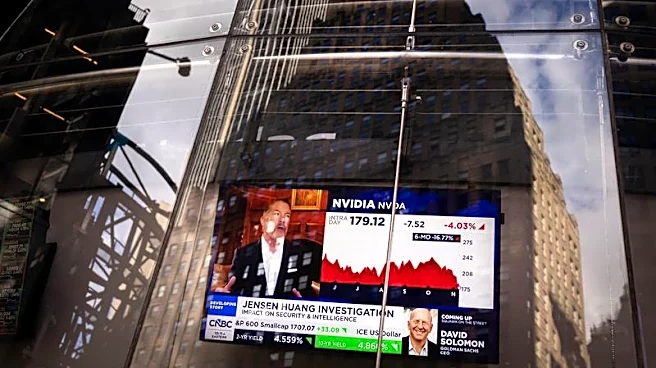
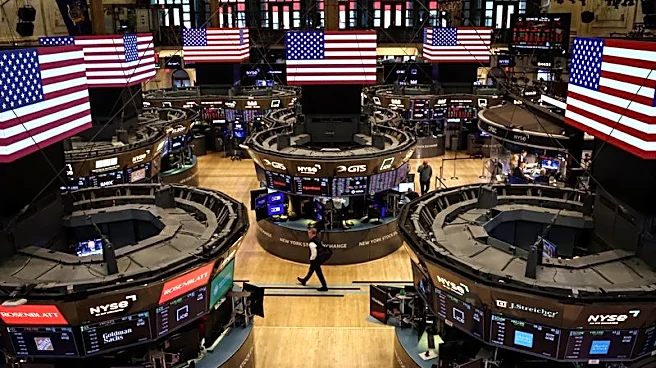
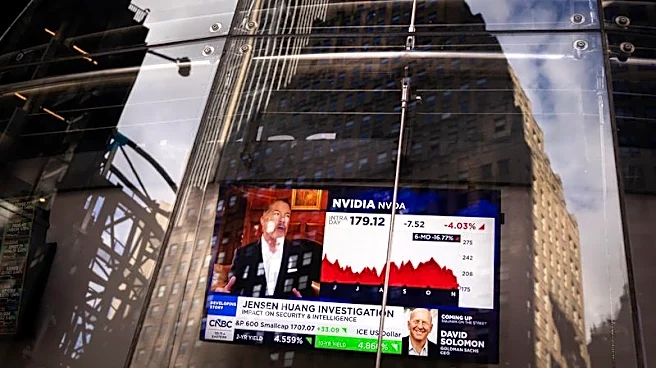
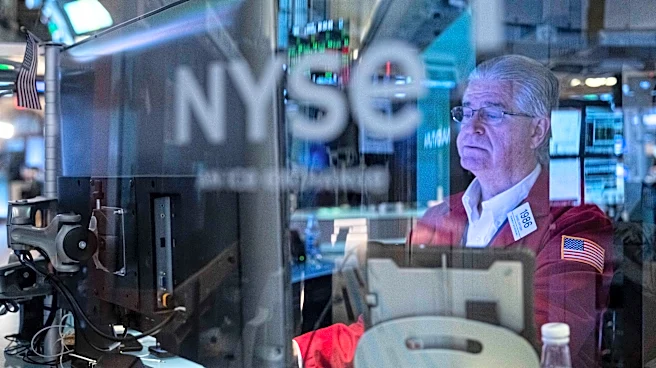
The Nasdaq Composite fell by 0.39% to 25,366.09 on Thursday, November 12, 2026, while the Dow Jones Industrial Average dropped 0.36% and the S&P 500 declined by 0.35%. This market downturn was primarily driven by the resignation of Nvidia CEO Jensen Huang,
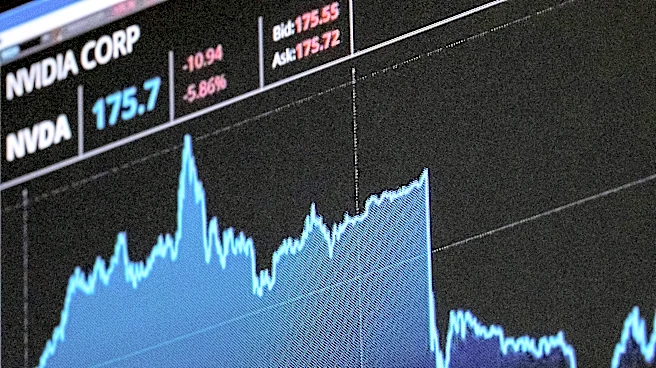
who named CFO Colette Kress as interim CEO. Nvidia's shares initially plunged by double digits before recovering slightly to a more than 4% loss, hitting a 52-week low. Investors reacted by shifting to Nvidia's competitors, with Advanced Micro Devices and Broadcom seeing gains of over 5% each, and hyperscalers like Alphabet also rising. Adding to market concerns, oil prices increased after President Trump stated on Truth Social that a deal with Iran was unnecessary, leading U.S. West Texas Intermediate crude futures to rise by 2.55% and Brent crude futures by 3.3%.
Why It's Important?
The departure of a key leader like Jensen Huang from Nvidia, a dominant player in the AI chip market, introduces significant uncertainty for the technology sector and the broader market. Nvidia's stock decline and the subsequent rally in competitors like AMD and Broadcom indicate a potential redistribution of market share and investor confidence within the semiconductor industry. This could impact the supply chain for AI development and the competitive landscape for technology companies. The rise in oil prices, fueled by President Trump's comments on Iran, signals renewed geopolitical risk in the Middle East, which can lead to higher energy costs for businesses and consumers, potentially exacerbating inflationary pressures and affecting economic growth in the U.S. and globally.
What's Next?
The technology sector will closely watch Nvidia's performance under interim CEO Colette Kress and how the company navigates the competitive landscape. The market will also monitor the performance of AMD, Broadcom, and other chip manufacturers as they potentially capitalize on Nvidia's challenges. Investors will be looking for further clarity on the future leadership at Nvidia and any strategic shifts. In the energy market, President Trump's stance on Iran will be a critical factor influencing oil prices. Any escalation or de-escalation of tensions in the Middle East could significantly impact global oil supply and demand, affecting energy costs and inflation. Upcoming economic data, including jobless claims and existing home sales, will also provide further clues on the broader economic outlook.
Beyond the Headlines
The sudden leadership change at Nvidia, a company at the forefront of the AI revolution, could have profound implications beyond immediate stock price movements. It raises questions about the stability of leadership in rapidly evolving tech companies and the potential for key personnel changes to disrupt innovation and market dominance. The shift of investor interest to Nvidia's competitors highlights the dynamic nature of the tech industry and the constant search for alternative leaders in critical sectors. Furthermore, the interplay between political rhetoric and commodity markets, as seen with President Trump's comments on Iran affecting oil prices, underscores the significant influence of geopolitical factors on economic stability and investor sentiment, creating a complex environment for long-term strategic planning.