









What's Happening?
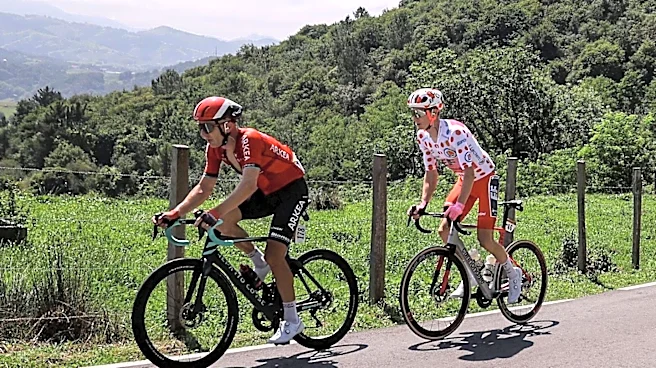
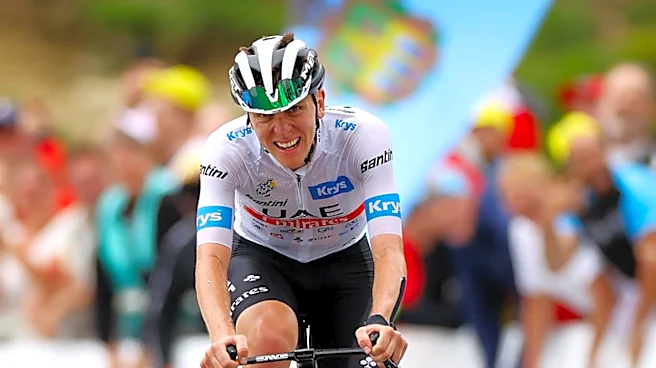
Tadej Pogačar, a prominent cyclist from UAE Team Emirates-XRG, has allowed the yellow jersey to pass to Torstein Træen of Uno-X Mobility during the fourth stage of the Tour de France. The decision came after a grueling day of racing in extreme heat, with
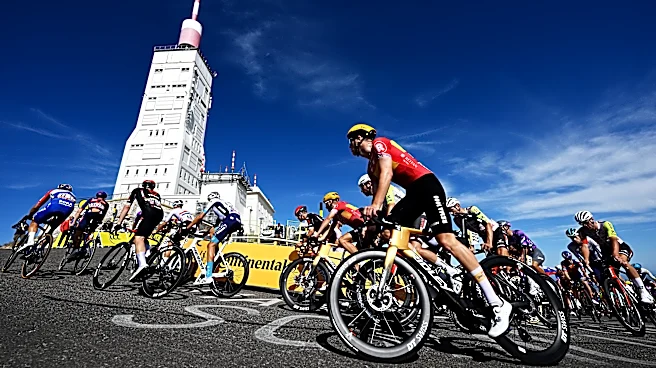
temperatures reaching 40°C. Pogačar, who started the day with a headache due to the heat, opted to stay with the peloton while a 34-rider breakaway group, which included no significant threats to his overall lead, took the stage. This strategic move allowed Pogačar to conserve energy and avoid the additional stress of media and podium duties, which are typically required of the yellow jersey holder.
Why It's Important?
The decision by Pogačar to relinquish the yellow jersey highlights the strategic considerations athletes must make in response to environmental conditions. By allowing Træen to take the lead, Pogačar can focus on recovery and energy conservation, which could be crucial as the Tour progresses, especially with more challenging stages ahead. This move also underscores the impact of climate conditions on sports events, as extreme heat can significantly affect performance and strategy. For Pogačar, this could mean a more sustainable approach to maintaining competitiveness throughout the Tour.
What's Next?
As the Tour de France continues, Pogačar and his team will likely focus on regaining the yellow jersey in the upcoming stages. The next significant challenge will be the mountain stages, including the iconic Col du Tourmalet. Pogačar's team will need to strategize effectively to manage the gap with Træen and other competitors. The ongoing heatwave will remain a factor, potentially influencing team tactics and rider performance. Observers will be keen to see how Pogačar balances the need for recovery with the ambition to reclaim the lead.