






What's Happening?
Normet and Codelco have initiated a five-year technology development program focused on advancing autonomous and remotely operated underground mining technologies. This collaboration aims to enhance safety and productivity in mining operations, with pilot
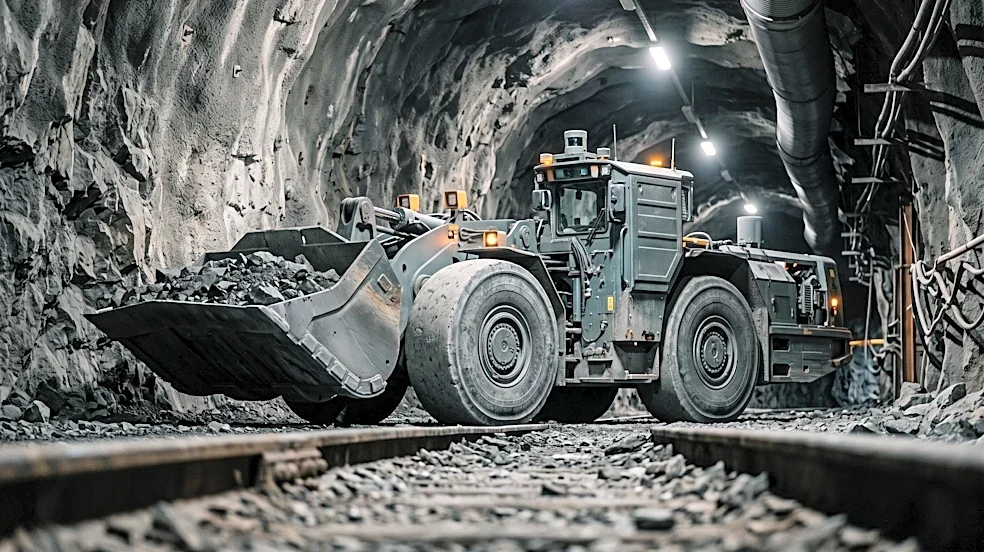
programs set to take place at Codelco’s El Teniente mine in Chile. The program will concentrate on three key areas: autonomous concrete transport and spraying, remotely-operated scaling, and autonomous stationary breaker operations. These technologies are designed to remove personnel from hazardous underground environments and improve operational efficiency, addressing challenges posed by deeper mines, seismic activity, and rising temperatures.
Why It's Important?
This partnership is significant for the mining industry, including its implications for U.S. companies operating globally or those looking to adopt advanced mining technologies. The development of autonomous and remote-controlled systems can drastically improve worker safety, a critical concern in underground mining where conditions can be extremely dangerous. Increased automation also leads to greater operational efficiency, reduced downtime, and potentially lower operating costs, which can benefit mining companies' profitability. For U.S. mining technology providers, this collaboration could set new industry standards and create opportunities for technology transfer and market expansion. The advancements could also influence regulatory frameworks for mining safety and automation in the U.S., pushing for similar technological adoptions.
What's Next?
The program will involve piloting the developed technologies at the El Teniente mine, with development activities primarily conducted at Normet’s Technology Center in Pirkkala. The first pilot will focus on autonomous concrete spraying and transport, utilizing advanced perception systems and AI. Subsequent pilots will address remotely-operated scaling and autonomous stationary breaker operations. The success of these pilots will be crucial in establishing future operating models for safer and more autonomous underground mining. The findings and technologies developed are expected to be shared within the industry, potentially leading to wider adoption and further innovation in mining automation globally.
Beyond the Headlines
Beyond the immediate benefits of safety and efficiency, this collaboration highlights a broader trend towards the digitalization and automation of heavy industries. The shift to autonomous operations in mining reflects a strategic response to labor shortages, increasing operational complexities, and the imperative for sustainable practices. This move also raises questions about the future of the mining workforce, requiring new skill sets in technology management and maintenance, and potentially leading to job displacement in traditional roles. Furthermore, the integration of AI and advanced robotics in such critical infrastructure underscores the growing reliance on sophisticated technological solutions to address industrial challenges, pushing the boundaries of what is possible in extreme environments. The ethical considerations of fully autonomous systems in hazardous environments, including accountability and decision-making protocols, will also become increasingly important as these technologies mature.