







What's Happening?
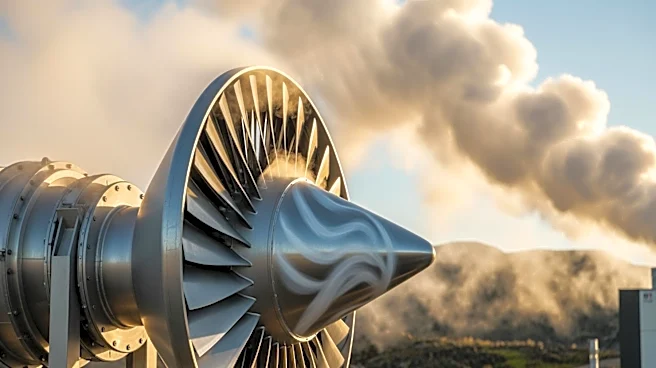
Geothermal energy is emerging as a significant player in the quest for clean, reliable power in the United States. The International Energy Agency projects that global investment in next-generation geothermal could reach $1 trillion by 2035. Enhanced
geothermal systems (EGS), which create artificial underground reservoirs, are at the forefront of this development. These systems promise to unlock more geothermal potential than currently accessible. Despite the focus on engineered systems, there is a vast reserve of naturally occurring geothermal energy that remains largely untapped. In the U.S., less than 10% of the western region has been explored for subsurface temperatures, leaving millions of acres of potentially high-value land untested. Recent advances in drilling techniques and subsurface modeling suggest that the geothermal resources could exceed thousands of gigawatts, far surpassing previous estimates.
Why It's Important?
The growing interest in geothermal energy is crucial for the U.S. as it seeks to diversify its energy sources and reduce carbon emissions. Geothermal power plants offer a reliable, carbon-free energy source that can operate around the clock, unlike solar and wind. The potential to discover vast geothermal resources could significantly alter the U.S. energy landscape, providing a stable and cost-effective alternative to fossil fuels. This shift could lead to reduced energy costs and increased energy security. Additionally, the development of geothermal resources could create new economic opportunities and jobs in exploration, drilling, and plant operations. As the U.S. moves towards a more sustainable energy future, geothermal energy could play a pivotal role in achieving these goals.
What's Next?
The exploration and development of geothermal resources are expected to accelerate, driven by advancements in technology and increased investment. AI models are improving the accuracy of identifying hidden geothermal systems, reducing exploration risks and costs. As more geothermal fields are discovered and developed, the U.S. could see a significant increase in geothermal capacity. This expansion will likely attract more investors and stakeholders interested in clean energy solutions. Policymakers may also play a role in supporting geothermal development through incentives and regulatory frameworks that encourage exploration and investment. The success of geothermal energy could inspire similar efforts in other regions with untapped geothermal potential, further advancing global clean energy initiatives.
Beyond the Headlines
The development of geothermal energy raises important considerations regarding environmental impact and land use. While geothermal energy is cleaner than fossil fuels, the drilling and development processes can still affect local ecosystems and water resources. Balancing the benefits of geothermal energy with environmental protection will be crucial. Additionally, the integration of geothermal energy into the existing power grid presents technical challenges that need to be addressed. As the industry grows, there will be a need for skilled workers and training programs to support the new jobs created. The long-term success of geothermal energy will depend on continued innovation, investment, and collaboration among industry, government, and communities.