






What's Happening?
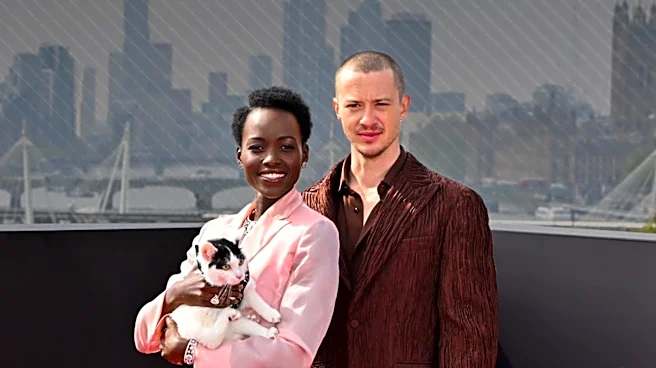
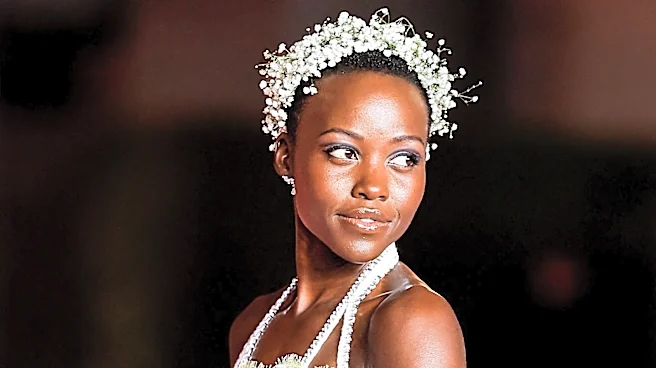
Lupita Nyong'o's portrayal of Helena in Christopher Nolan's film 'The Odyssey' has sparked significant debate among historians and critics. The film, which is inspired by Homer's epic, features Nyong'o as the daughter of Zeus and queen of Sparta, a role
traditionally depicted by white actresses. Critics like historian David Hanson have questioned the casting choice, arguing it challenges the conventional portrayal of Helena's 'whiteness.' However, the film has also been praised for its bold representation, with Nolan's decision to cast Nyong'o seen as a challenge to the ideological constructs of beauty and race. The film has ignited discussions about the historical accuracy and the ideological biases that have shaped the portrayal of historical figures in media.
Why It's Important?
The casting of Lupita Nyong'o as Helena in 'The Odyssey' is significant as it challenges long-standing racial stereotypes in historical narratives. By casting a Black actress in a traditionally white role, the film questions the entrenched ideologies that equate beauty with whiteness. This move is part of a broader cultural shift towards more inclusive and diverse representations in media, which can influence public perceptions and cultural norms. The debate highlights the ongoing struggle between traditional historical interpretations and modern efforts to diversify storytelling. It underscores the importance of re-evaluating historical narratives to reflect a more inclusive and accurate portrayal of history.