






What's Happening?
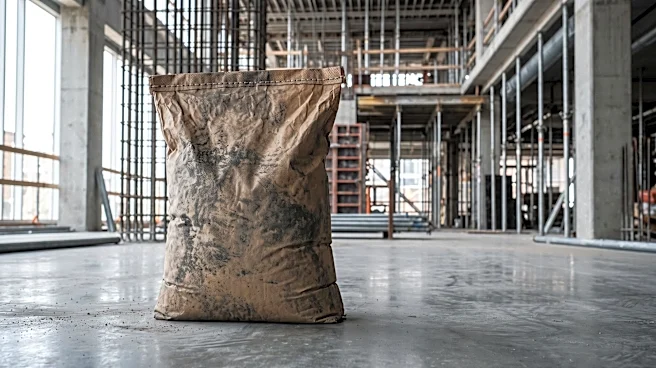
Portland Pozzolana Cement (PPC) is a blended cement type regulated by the Bureau of Indian Standards (BIS) under the IS 1489 code. This cement is produced by grinding clinker with gypsum and a pozzolana, typically fly ash. The IS 1489 (Part 1) standard
specifies that fly ash content in PPC must range from 15% to 35% by mass. Unlike Ordinary Portland Cement (OPC), PPC does not have multiple strength grades; it has a single requirement of at least 33 MPa strength at 28 days. PPC gains strength more slowly than OPC but offers benefits such as lower heat of hydration and denser concrete over time. The BIS marking is crucial for consumers when purchasing PPC cement, as selling cement without this mark is prohibited. Additionally, the BIS advises retesting cement used after three months from its packing date.
Why It's Important?
The regulation of PPC cement by the Bureau of Indian Standards (BIS) is significant for ensuring quality and safety in construction projects across India. By setting specific standards for composition, such as the fly ash content and minimum strength requirements, BIS helps maintain consistency and reliability in building materials. This is particularly important for applications where durability and low heat generation are prioritized over rapid strength gain, such as in foundations, rafts, thick pours, and structures exposed to water or sulfates. The emphasis on the BIS marking provides a critical consumer protection mechanism, allowing buyers to verify the authenticity and compliance of the cement. Furthermore, the guidance on cement retesting after three months addresses potential degradation due to storage, preventing the use of compromised materials that could lead to structural failures. The widespread use of blended cements like PPC, which constituted about 73% of India's output in 2022, also highlights its role in sustainable construction practices due to its lower clinker content, which is the most CO2-intensive part of cement production.
What's Next?
For consumers and construction professionals, the continued adherence to BIS standards for PPC cement will remain essential. Engineers will need to specify PPC cement appropriately for projects where its properties, such as slower strength gain and lower heat of hydration, are advantageous. The recommendation for extended curing of blended cements, particularly in hot and dry conditions, will need to be consistently applied to ensure optimal performance. Manufacturers will continue to produce PPC cement in compliance with IS 1489, ensuring the presence of the BIS marking on their products. Regular checks for the BIS mark and the packing date will be standard practice for purchasers. The ongoing focus on blended cements also suggests a continued trend towards more sustainable construction materials in India, driven by both regulatory frameworks and environmental considerations.
Beyond the Headlines
The regulatory framework established by the Bureau of Indian Standards for PPC cement extends beyond mere technical specifications; it underpins broader societal and environmental implications. Ethically, the BIS marking ensures that consumers receive products that meet established quality and safety benchmarks, fostering trust in the construction industry. From an environmental perspective, the promotion and regulation of PPC, with its lower clinker content, contribute to reducing the carbon footprint of cement production, aligning with global efforts towards sustainability. The emphasis on proper curing practices also highlights the importance of skilled labor and adherence to best practices in construction, which can have long-term impacts on the longevity and resilience of infrastructure. This regulatory oversight reflects a commitment to balancing economic development with environmental stewardship and public safety, shaping the future of construction practices in India.