

What's Happening?
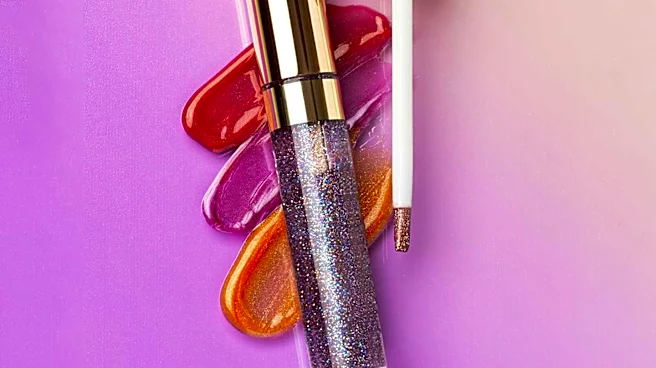
Jelly lip oils are gaining traction in the beauty industry as a non-sticky alternative for lip hydration and tint. These products are highlighted for their ability to provide moisture without the heavy, tacky feel often associated with traditional lip glosses.
Brands like TIRTIR and Kaja are offering tinted lip oils that can be used independently for a subtle color or layered over lipstick for enhanced shine. The formulation of these lip oils often includes skin-first ingredients within a bouncy jelly base, designed to deliver deep hydration and a translucent wash of color. This innovation aims to bridge the gap between soothing lip balms and high-drama lip glosses, offering a hybrid product that prioritizes both lip care and aesthetic appeal. The trend emphasizes a 'sugar-glazed' look, providing a cushiony bounce and a sleek glaze that is both comfortable and visually appealing.
Why It's Important?
The rise of jelly lip oils signifies a notable shift in consumer preferences within the U.S. beauty market, moving towards hybrid products that offer both cosmetic benefits and skincare advantages. This trend caters to a growing demand for multi-functional beauty items that simplify routines while delivering effective results. For beauty brands, this means an opportunity to innovate with formulations that combine hydration, non-stickiness, and buildable color, potentially capturing a wider demographic seeking effortless yet polished looks. The emphasis on 'skin-first ingredients' also aligns with the broader clean beauty movement, where consumers are increasingly scrutinizing product ingredients for health and efficacy. This could lead to increased competition among brands to develop advanced lip care solutions, influencing product development and marketing strategies across the industry.
What's Next?
The continued popularity of jelly lip oils is likely to drive further innovation in lip care products. Consumers can expect to see more brands introducing similar hybrid formulations that combine the benefits of balms, oils, and glosses. This may include a wider range of tints, finishes, and active ingredients aimed at addressing various lip concerns, such as plumping, anti-aging, and enhanced hydration. The focus on non-sticky textures and natural-looking finishes is expected to persist, influencing trends in lip makeup for the foreseeable future. Additionally, the success of these products could encourage cross-category innovation, inspiring the development of other makeup-skincare hybrids in different beauty segments. Brands will likely continue to emphasize the 'effortless luxury' and 'skincare-makeup hybrid' aspects in their marketing to appeal to modern consumers.
Beyond the Headlines
The emergence of jelly lip oils reflects a deeper cultural shift towards authenticity and comfort in beauty standards. The 'sugar-glazed' lip trend, characterized by its natural and luminous finish, moves away from the high-maintenance, heavily contoured looks that once dominated the beauty landscape. This shift suggests a consumer desire for products that enhance natural beauty rather than mask it, promoting a more relaxed and self-accepting approach to personal aesthetics. The emphasis on 'skin-first' ingredients also highlights a growing consumer awareness and demand for transparency in product formulations, pushing the beauty industry towards more ethical and health-conscious practices. This trend could foster a more inclusive beauty environment where comfort and natural radiance are celebrated, potentially influencing long-term beauty ideals and product development cycles.