


What's Happening?
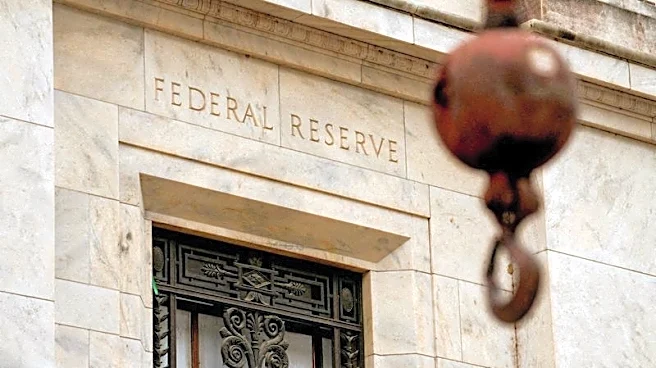
According to minutes from the October meeting, nearly all Federal Reserve officials expect a quarter-point interest rate increase in December. Some officials, including Governor Christopher Waller, advocate for more aggressive action, such as a half-point
increase and potentially several additional hikes, due to inflation spreading across more goods and services. Other officials, however, favor a more gradual approach. This debate within the Federal Reserve reflects concerns that businesses are increasingly comfortable passing higher costs on to consumers. Further rate increases would lead to higher borrowing costs for both consumers and businesses, impacting financing and spending decisions. The current prime rate is approximately 7%, and any additional increases could push it higher, influencing decisions on large-scale financing deals for businesses.
Why It's Important?
The Federal Reserve's anticipated interest rate hikes are a critical development for the U.S. economy, directly affecting businesses and consumers. Higher interest rates increase the cost of borrowing, which can deter businesses from investing in new equipment, property, or acquisitions, potentially slowing economic growth. For consumers, it means higher costs for mortgages, car loans, and credit card debt, which can reduce discretionary spending. The debate among Fed officials highlights the delicate balance between controlling inflation and avoiding a recession. While some businesses may find ways to be creative with financing, such as increased down payments or seller-based financing, the overall trend of rising rates will add pressure to financial planning. The expectation that these rates will remain elevated for most of 2027 suggests a prolonged period of tighter monetary policy, requiring businesses and individuals to adjust their financial strategies accordingly.
What's Next?
Businesses and consumers should prepare for continued elevated interest rates throughout most of 2027. The Federal Reserve's actions will likely lead to increased borrowing costs, prompting businesses to carefully evaluate the return on investment (ROI) for any new ventures or expansions. Financial institutions will adjust their lending rates in response to the Fed's decisions, impacting the availability and affordability of credit. Consumers may face higher costs for loans and mortgages, influencing their purchasing power and investment decisions. The ongoing monitoring of inflation data and economic indicators will be crucial for the Federal Reserve in determining future rate adjustments. Businesses are advised to factor in these higher costs into their financial projections and explore alternative financing options to mitigate the impact.
Beyond the Headlines
The Federal Reserve's approach to interest rates extends beyond immediate economic impacts, touching upon broader societal implications. The persistent inflation and the Fed's response highlight the challenges of managing a complex global economy. The discussion around independent contractors and the gig economy, also mentioned in the source, suggests a shift in labor markets that could be influenced by economic conditions. As AI continues to advance, its role in both creating new business opportunities and posing cybersecurity threats adds another layer of complexity to the economic landscape. The interplay between monetary policy, labor market dynamics, and technological advancements will shape the future of U.S. business and employment, requiring adaptability from both policymakers and private sector entities. The emphasis on cybersecurity in an AI-driven world also points to increasing operational risks that businesses must address proactively.