








What's Happening?
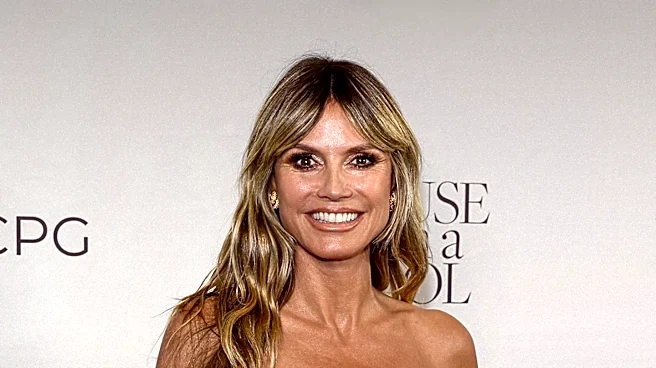
German fashion brand s.Oliver has launched a new campaign titled 'Casual Since Forever' featuring supermodel Heidi Klum. The campaign uniquely utilizes artificial intelligence to present two versions of Klum: her current self and an AI-generated younger
version from the 1990s. This dual portrayal is central to the campaign's video and imagery, aiming to connect Klum's personal history, which began in the 90s, with the brand's new Vintage Collection. The campaign emphasizes themes of change and consistency, suggesting that while Klum has evolved, her casual style remains a constant, mirroring s.Oliver's brand identity. The Vintage Collection itself incorporates typical 90s elements such as sportswear-inspired looks, loose cuts, denim, sweatshirts, T-shirts, and prominent logos, reinterpreting them for contemporary fashion. The campaign's goal is to sharpen s.Oliver's positioning as a casual brand and drive sales by linking emotional storytelling with direct product presentation and purchasing options on its campaign page. The use of AI is explicitly marked in the campaign materials to indicate that the younger Heidi Klum is an artificial reconstruction rather than an archival image.
Why It's Important?
This campaign highlights a growing trend in advertising where brands leverage advanced technology like AI to create compelling and attention-grabbing narratives. For the fashion industry, the use of AI to digitally recreate younger versions of celebrities offers new avenues for marketing, allowing brands to tap into nostalgia and connect different eras of fashion. This approach can significantly enhance brand visibility and generate discussion, potentially leading to increased consumer engagement and sales. However, it also raises questions about authenticity and transparency in advertising, as the line between real and artificially generated content becomes increasingly blurred. The explicit labeling of AI-generated content by s.Oliver sets a precedent for how brands might navigate these ethical considerations, aiming to maintain consumer trust while exploring innovative marketing techniques. The campaign's success could influence other brands to adopt similar AI-driven strategies, further integrating technology into the creative and commercial aspects of the fashion and advertising sectors.
What's Next?
The 'Casual Since Forever' campaign is designed to drive immediate sales through its integrated approach, linking emotional storytelling with direct product links and a loyalty program incentive. Future steps will likely involve monitoring the campaign's effectiveness in terms of brand engagement, website traffic, and sales conversions for the Vintage Collection. The brand may analyze consumer reactions to the AI-generated content to refine future marketing strategies, particularly regarding the balance between innovation and authenticity. If successful, s.Oliver could expand this AI-driven narrative to other product lines or future campaigns, potentially setting a new standard for how fashion brands interact with their audience. Other brands in the U.S. and globally will likely observe this campaign's performance to assess the viability and impact of using AI for celebrity endorsements and nostalgic marketing, potentially leading to a broader adoption of such technologies in advertising.
Beyond the Headlines
The campaign's use of AI to create a 'younger self' for Heidi Klum delves into deeper implications concerning the perception of reality and authenticity in media. While explicitly labeled as AI-generated, the ability to convincingly recreate past versions of individuals raises ethical questions about digital manipulation and the potential for misleading audiences if not handled transparently. This trend could lead to a future where historical figures or deceased celebrities are 'resurrected' for commercial purposes, prompting debates about consent, legacy, and the digital rights of individuals. Furthermore, the campaign's reliance on nostalgia for the 1990s, presented in an idealized and simplified manner, reflects a broader cultural phenomenon of romanticizing the past. This selective portrayal of history, while effective for marketing, can obscure the complexities and less attractive aspects of any given era, shaping public memory through commercial narratives. The integration of AI into such campaigns thus not only transforms advertising but also influences how society engages with its past and perceives authenticity in a digitally augmented world.