







What's Happening?
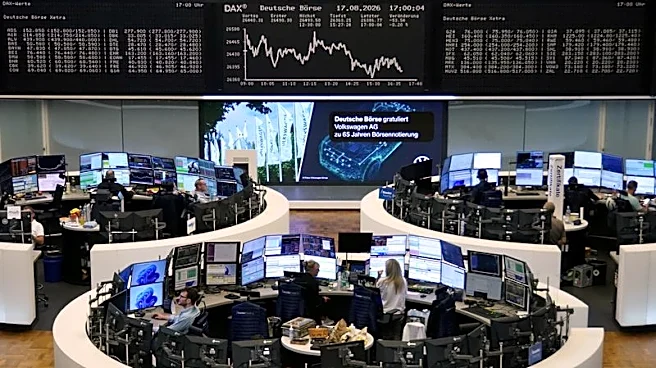
Dutch chip stocks, including ASML, ASM International (ASMI), and BE Semiconductor Industries (BESI), experienced significant declines on the AEX index. ASML dropped approximately 4.6%, ASMI lost around 5.8%, and BESI fell by roughly 5.5%. This downturn
is not isolated to the Netherlands, as technology companies across Europe are facing pressure due to rising interest rates. The sell-off is primarily attributed to investors taking profits after a strong rally in the chip sector, which was fueled by optimism surrounding artificial intelligence. The increasing global interest rates are making future earnings of growth-oriented technology companies less attractive to investors, as borrowing costs rise and the present value of future profits diminishes.
Why It's Important?
This decline in major chip stocks signals a broader shift in investor sentiment within the technology sector, particularly for companies with high valuations based on future growth. Rising interest rates increase the cost of capital for businesses and make fixed-income investments more appealing, drawing money away from riskier growth stocks. For the U.S. economy, this trend could impact technology companies that rely on similar growth projections and access to capital. The chip industry is foundational to many technological advancements, including AI, and a sustained downturn could affect innovation and production cycles globally. Furthermore, the interconnectedness of global financial markets means that European trends can quickly influence U.S. markets, potentially leading to similar pressures on American tech stocks and the broader economic outlook.
What's Next?
The immediate future for these chip stocks will likely depend on the trajectory of global interest rates and inflation concerns. If central banks continue to maintain high interest rates or signal further hikes, technology stocks could face continued headwinds. Investors will be closely watching for any signs of stabilization in interest rates or a renewed surge in demand for chip-related technologies. Companies like ASML, despite the current market pressure, have strong underlying fundamentals, with ASML having recently raised its 2026 revenue forecast and reporting robust order inflows. However, geopolitical risks, such as potential U.S. export restrictions on advanced chip technology to China, could introduce additional volatility for ASML and the broader chip industry, influencing future investment decisions and market performance.
Beyond the Headlines
The current market dynamics highlight the inherent sensitivity of high-growth technology sectors to macroeconomic factors like interest rates and inflation. While the AI boom has driven significant valuations, the reality of rising borrowing costs is prompting a re-evaluation of these companies' future earnings potential. This situation also underscores the delicate balance between technological innovation and geopolitical stability, particularly concerning critical components like semiconductors. The ongoing discussions around export controls to China, as seen with ASML, illustrate how national security concerns can directly impact the global supply chain and the financial performance of leading technology firms. This interplay of economic policy, technological advancement, and international relations will continue to shape the investment landscape for the foreseeable future, potentially leading to increased scrutiny of companies with significant international exposure.