





What's Happening?
Italian documentary filmmaker Gianfranco Rosi, known for winning both the Golden Lion at Venice for 'Sacro GRA' and the Golden Bear at Berlin for 'Fire at Sea,' has released his latest work, 'Below the Clouds.' This film delves into the lives of Neapolitans
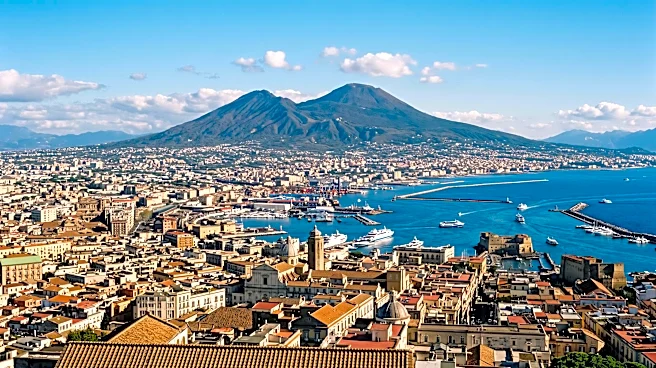
residing in the shadow of Mount Vesuvius and the Gulf of Naples. Rosi spent three years exploring both the surface and subterranean worlds of the region, capturing the daily existence of residents who live with the constant awareness of the volcano's potential eruption. The documentary portrays Naples as a city where the living and the dead coexist, where underground forces influence the surface, and where history continuously shapes the present. Rosi's film, shot in black and white, weaves together everyday scenes, from children receiving tutoring to emergency call center operators calming callers during tremors. It also explores the ruins of Pompeii and the illegal tunnels dug by grave robbers seeking ancient artifacts for the black market. The film features music by Oscar-winner Daniel Blumberg and was awarded the Special Jury Prize at the Venice Film Festival.
Why It's Important?
Gianfranco Rosi's 'Below the Clouds' offers a significant cultural contribution by providing an intimate and profound look into a unique urban environment. The film's exploration of Naples highlights the resilience and distinct cultural identity of its inhabitants, who navigate life under the perpetual threat of a natural disaster. This documentary is important for its artistic merit, showcasing Rosi's acclaimed filmmaking style, which combines observational cinema with a deep sense of place and human emotion. The film's focus on the interplay between historical legacy (Pompeii), contemporary life, and the looming presence of Vesuvius offers a compelling narrative about human adaptation and the enduring power of nature. For audiences, it provides a window into a specific cultural context, fostering a greater understanding of how communities cope with existential threats while maintaining their daily routines and vibrant spirit. The film's recognition at the Venice Film Festival further solidifies its importance in the global documentary landscape.
What's Next?
Following its Special Jury Prize win at the Venice Film Festival, 'Below the Clouds' is expected to continue its run on the international film festival circuit, potentially gaining further accolades and critical attention. Its distribution will likely expand to art-house cinemas and streaming platforms, making it accessible to a broader audience interested in documentary filmmaking, Italian culture, and human-interest stories. The film's success could also inspire further academic and cultural discussions about the unique socio-environmental dynamics of Naples and other communities living in high-risk natural environments. For Gianfranco Rosi, this film reinforces his reputation as a leading documentary filmmaker, potentially paving the way for future projects that continue his exploration of complex societal themes and human experiences. The film's themes of resilience and the coexistence of life and death may also spark conversations about urban planning and disaster preparedness in similar regions worldwide.
Beyond the Headlines
'Below the Clouds' transcends a simple portrayal of Naples by delving into deeper philosophical and existential themes. The film subtly explores the human relationship with mortality and the past, as residents live in a city built upon layers of history and under the constant reminder of Vesuvius's destructive power. The black-and-white cinematography enhances this timeless quality, blurring the lines between past and present and emphasizing the enduring human spirit. The illegal grave robbing depicted in the film also touches upon ethical questions regarding cultural heritage, preservation, and the economic pressures that drive such activities. Rosi's observational approach allows viewers to contemplate the delicate balance between human endeavor and natural forces, highlighting how communities forge identity and meaning in the face of inevitable change and potential catastrophe. This documentary serves as a poignant meditation on life, death, and the indelible mark of history on a place and its people.